Issue 14 | September 20, 2026 | Sign up
When choosing our son’s name, I drew a blank. I don’t exactly collect names. So over a few nights, I read a guide of 5,000 baby names from across cultures and developed a list that was, to my surprise, strongly Anglo-Saxon and Germanic.
I took that list to my wife, explaining that I wasn’t suggesting we use them, just that I liked them. She struck the first one right away, which we laughed a good deal about—Hrothgar. We moved on. But, looking back, I did like it. Why? What was it about "Hrothgar" that made me feel so strongly?
In this issue, I talk about the ‘inherited’ cultural artifacts we carry—conventions, ideas, metaphors, and yes, names. Like Joseph Campbell, Eve and I believe we’re each a walking bundle of unconscious beliefs and ideas which yearn to express and invisibly guide our lives.
And, if all society is drawing from that same lot, I fear our stock of stories has nearly spoiled.
We badly need new metaphors
Most metaphors in use at work are clichés exhausted of all meaning. And meaning is what we so desperately want from these stories.
“The stories people attach to are ones they see themselves in, which help them make sense of their own life,” says Eve. “They’re artifacts that imbue memory, sensation, and feeling, which expand our identity and expression. Which are shareable, and create shared connection. Collecting self-myths is a very important process.”
Yet at work, I find it’s mostly gunk. It’s all burning ships and Achilles’ heels, Pandora’s boxes (how many times must it open?) and rabbit holes (not again). Work chats are a troubling spew of war propaganda (gunning for position, exploding topics, battlecards) and superheroic melodrama (“You either die a hero or live long enough to become a villain” and “With great power comes great responsibility,” which are both from superhero films—The Dark Knight, 2008 and Spiderman, 2002, respectively. Look it up.)
What I’m saying is it feels like we’re all trying to communicate in an alphabet where we’ve lost most of the letters. I want to start a project of cataloging better and more precise metaphors. So maybe this is a start?
Here, I offer you some of my favorites for work.
1. On the perils of over-exactitude
When I see good ideas caught up in committee, I trot out this beauty:
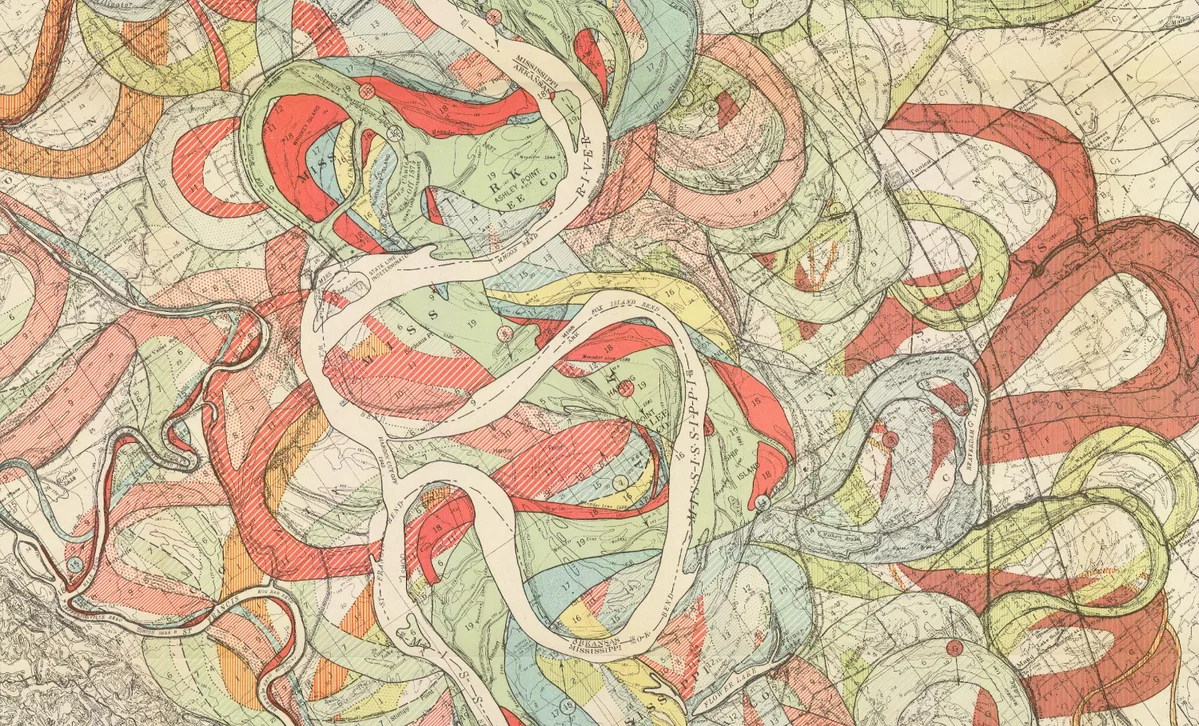
There once was an empire that considered mapmaking the highest of all arts. Its cartographers developed such a rare taste for spatial precision that no map was ever realistic enough. They pursued larger and larger maps. Eventually, the guild struck a map of the empire “whose size was that of the Empire, and which coincided point for point with it.” But the map was so colossal, so detailed, they couldn’t maintain it. Their descendants neglected it. As the map decayed, so did the empire.
It’s a story about the perils of being too exact.
Source: Jorge Luis Borges’ essays, 1641
2. Lecturing birds to fly
If you write at work, most of your readers already know their domain and need no refresher. Yet writers are always cheerfully offering them because said writers are interlopers. I call this lecturing birds to fly, after Nassim Taleb’s parable, which is adapted from a much older story.
There once was an odd professor who’d rise each morning to lecture the birds in the quad on how to fly. The first year, students laughed. The second year, they looked askance. But after enough generations, it seeped into public consciousness that he was, in some cryptic way, associated with their locomotion; this calcified into belief. Then the professor died, sparking a panic about the future of the birds, and people flocked to replace him.
But of course, the avian pupils never needed help.
Source: Nassim Taleb’s Antifragile, 2012
3. The Sword of Damocles
Spare me your “grass is always greener" talk and try this version—it has more bite:
The Greek king Damocles ruled by the sword, pitiless and grim. Though it did not make him happy; he lived in a state of paranoia, forever fending off plots on his life. He lived within a moat and trusted no one to shave his beard but his daughters. One day an itinerant court flatterer told him how blissful he must be to have all these riches, to which Damocles replied, “Do you wish to know these delights?” The flattered nodded. The next day Damocles seated the flatterer on the throne with an executioner’s scimitar suspended above his head by a single horsehair. That, Damocles explained, is the feeling.
Source: Cicero’s writings, 45 BCE
4. The Ship of Theseus
Has a thing changed so much, it’s no longer the genuine article?
Theseus died the hero of Athens, and the city preserved his ship on display. Subsequent generations made repairs—for it was exposed to the elements. After centuries, every board had been replaced. Which raised a question that rent the citizenry apart: Given that every board was now new, was this still the ship of Theseus? And worth preserving?
Source: Plutarch, 90 CE
5. The City & The City
Does everyone around you seem clueless to a truth right before them?
The Eastern-European cities of Besźel and Ul Qoma sit side by side and, in fact, overlap—they are built on top of one another. The people walk amongst each other. But they do not see the others. There has been such brutal repression by the respective tyrants that the people of each city are convinced the other is not there. Though they jostle amidst and among, they no longer notice the neighboring inhabitants. The other city is invisible to them.
Sound like anything?
Source: From a 2009 crime novel.
6. Evil, honor, and retribution
I love old English literature. Not sure why. It has always excited me. I was one of those insufferable youths who needed you to know he knew ancient epic poems, like Beowulf. And, if you’re looking for a tale of good versus evil, this one spawned the genre:
The swamp-dwelling monster Grendel overhears the heroes of Herot Hall celebrating, despises them, slips in at night, and murders many. The survivors awaken to carnage; every night for 12 years they are hunted, until the hero Beowulf hears of this and sails to confront Grendel with his men. In the encounter, Beowulf manfully refuses a weapon and wrestles the clawed Grendel, tearing off one of its arms. Grendel escapes. But then Beowulf and his men are pursued by the creature’s far more terrifying mother, who after a great battle, Beowulf slays, saving the day. Order is restored.
It is cliché, but the origin of such clichés.
Source: Beowulf, ~700 CE.
Apotheosis
Around our son’s nine-month birthday, I was writing this issue of the newsletter and looked up Beowulf to reacquaint myself. There, I read aboutthe king of the Danes, who Beowulf saves. His name was Hrothgar.
That was rattling around in there, all those decades. And it was still spry enough to present itself. Funny how mindstuff works.
In the end, we named our son something off my wife’s list.
Practical application: Demand better metaphors at work. Hunt for those original ideastuffs and freshen the well from which we all draw. Have one? Do share.

There's a principle for this: Storytelling Matters
At Fenwick, we believe stories are a primordial human technology for moving people to action; and which help them tell stories about themselves, which they become.

Inside Fenwick
Know a team that wants a refresher on clear writing? We teach a course.
Worth reading
The Economist: The Toddessy. An office epic that’d make Homer mad.
Uncleftish beholding. An explanation of nuclear physics written in Anglo-Saxon, to prove how useful all the Greek and Latin additions to our language have been.
HBR: When CEOs use war metaphors, analysts worry.
Ecoacoustics: Can we measure environment health by how it sounds underground?
3Blue1Brown. A site that just explains things via video. You’ll lose yourself.
Pew Research: Young adults and the news.
Crossing guard makes $14k/month by mailing her musings. (And on Instagram.) She couldn’t have predicted this. Whatever you’re delaying, just start and test. You don’t know what the market will support, and the sooner you know, the more you can test.
On AI
What am I, an animator with AI?
AI gone awry at San Jose State University. Sometimes it enables our worst instincts. Said a client recently, “How do we use AI to clean up our team’s AI-generated, 80-slide decks?” To which I replied, “Why are they creating 80-slide decks in the first place?”
FT: How much value is AI *actually* creating? Both sides can claim a sort of victory.
A stunning show of avarice in media.
Neat sites
Just for fun
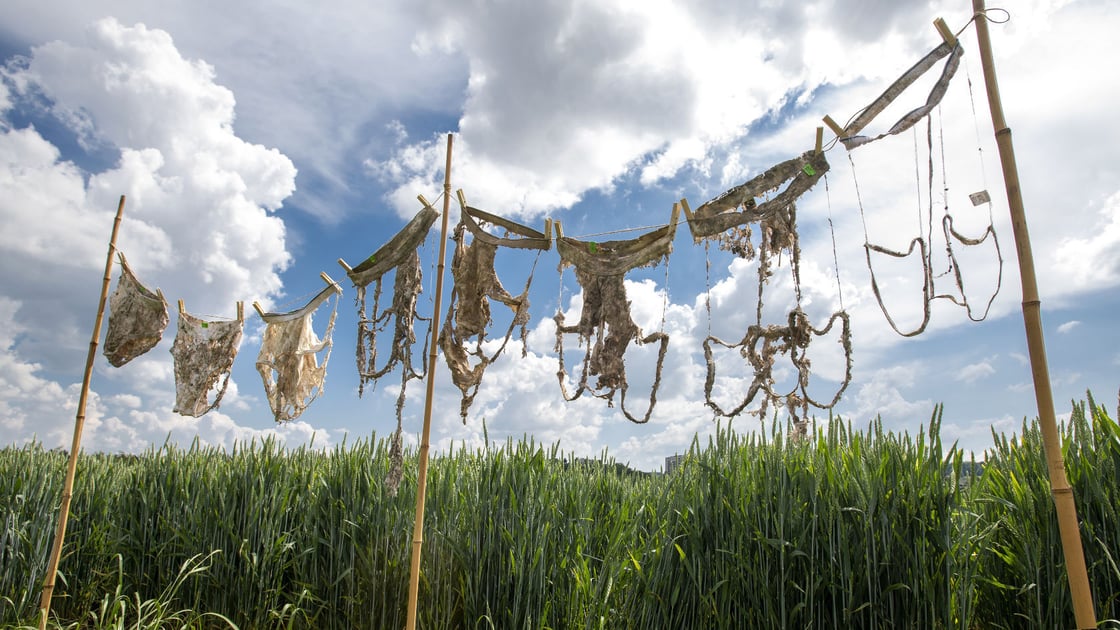
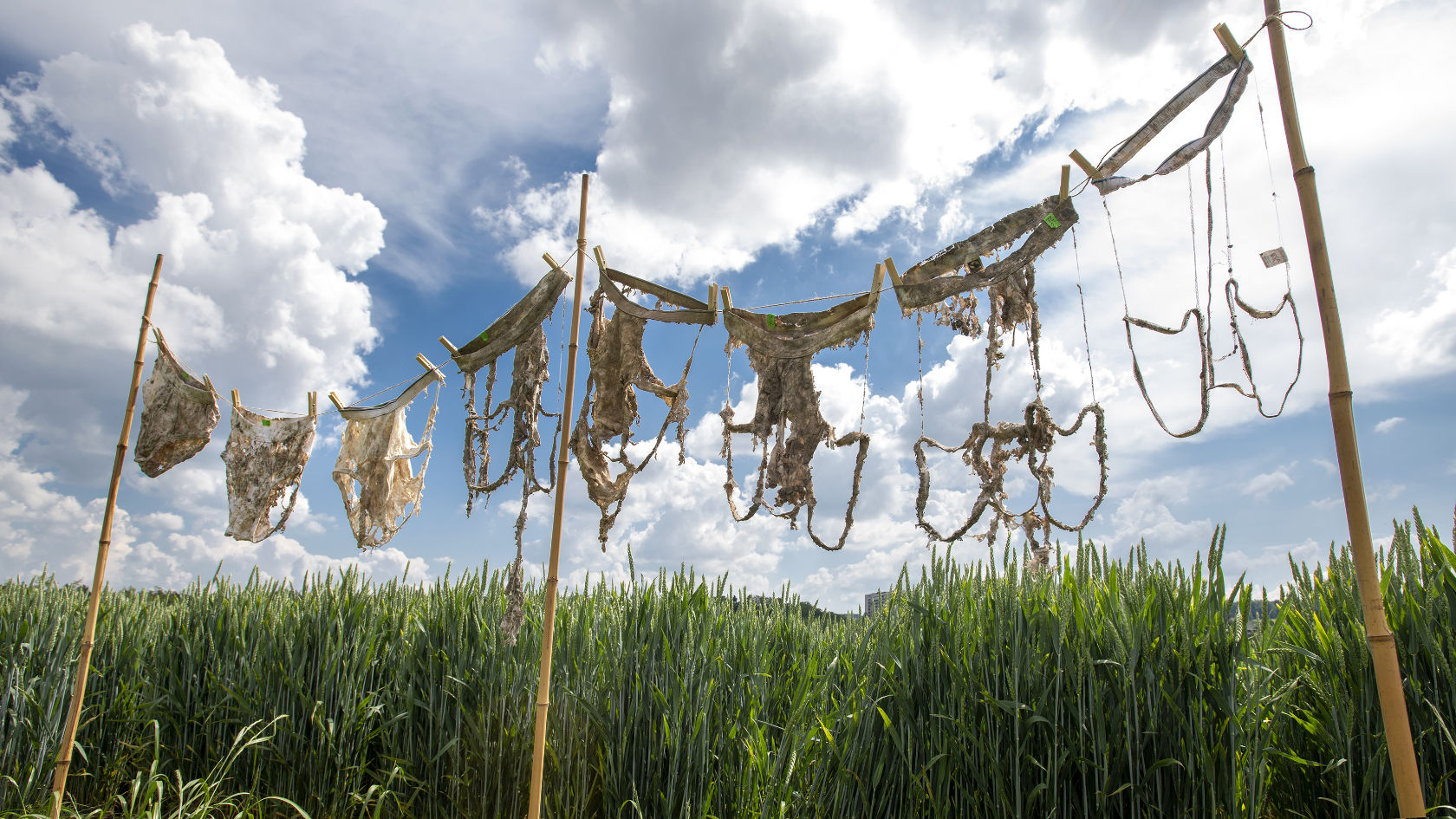
Buried underwear show soil health.