
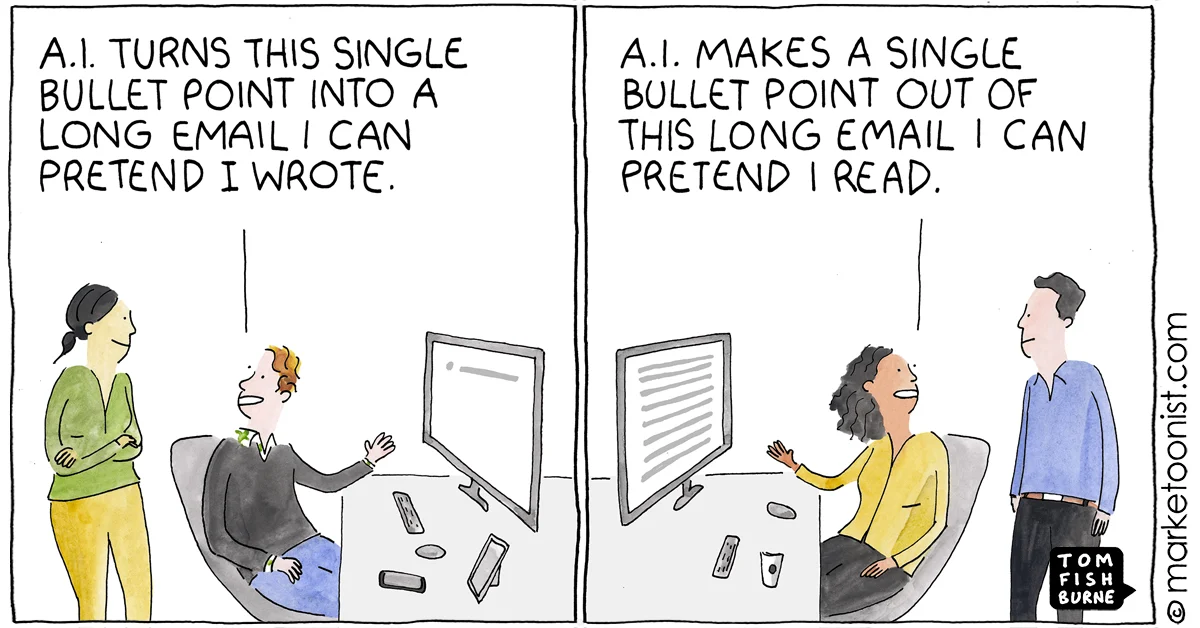
The emails I receive at work now spill off the screen.
Same with briefs and decks. People used to say, “Can we just chat?” Now they send elephantine edicts. One person just sent me 16 pages of prep material for his upcoming talk. I asked which points he’d like to include, and he sheepishly admitted he didn’t know. He hadn’t read it yet.
People are now flinging barnyards of unedited slop at each other and it’s a total misunderstanding of how thought work actually occurs.
In this article, I discuss how to navigate this profoundly strange moment as someone who fears your team will lose their thinking edge. Each section includes a group exercise.
1. Stop the slop-slop-pass
What even is communication? It’s this: Someone thinks something. They formulate it into symbols and say or write it—the transmission. The recipient decodes it. Pretty basic. Because both parties were involved in formulating and assessing those ideas, they’re qualified to discuss them. They can have a productive meeting.
The whole value of communication is that the message is received; it is not enough to merely send.
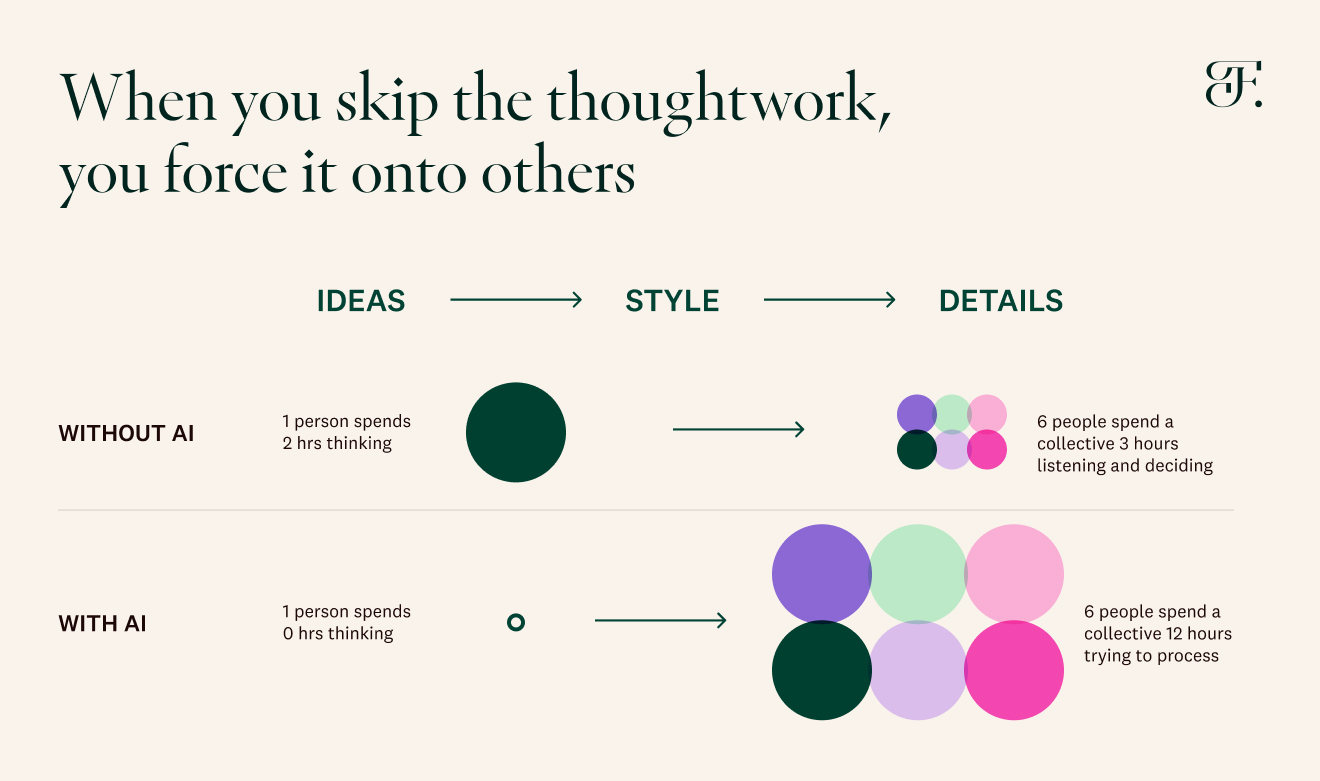
So what happens when people send each other notes that they themselves did not develop? The downstream labor is now doubled. They slog through a longer meeting to figure out what they’re even discussing. Which is unproductive. And if they decide the idea wasn’t worth pursuing? Couldn’t they have saved themselves that meeting?
Further—and I will go on—AI writing is difficult to read because LLMs do not think; they only guess the next most likely word. That means they assemble piles of phrases that are grammatically correct and rife with logical errors. LLMs are factually wrong 60% of the time. And AI writing is harder to edit, so it takes more brainpower to change.
This means if you are sending people AI writing sight unseen, you're just asking them to do your work.
This is all to say, implore your team to never outsource the understanding. If they don’t know the contents, it’s not communication.
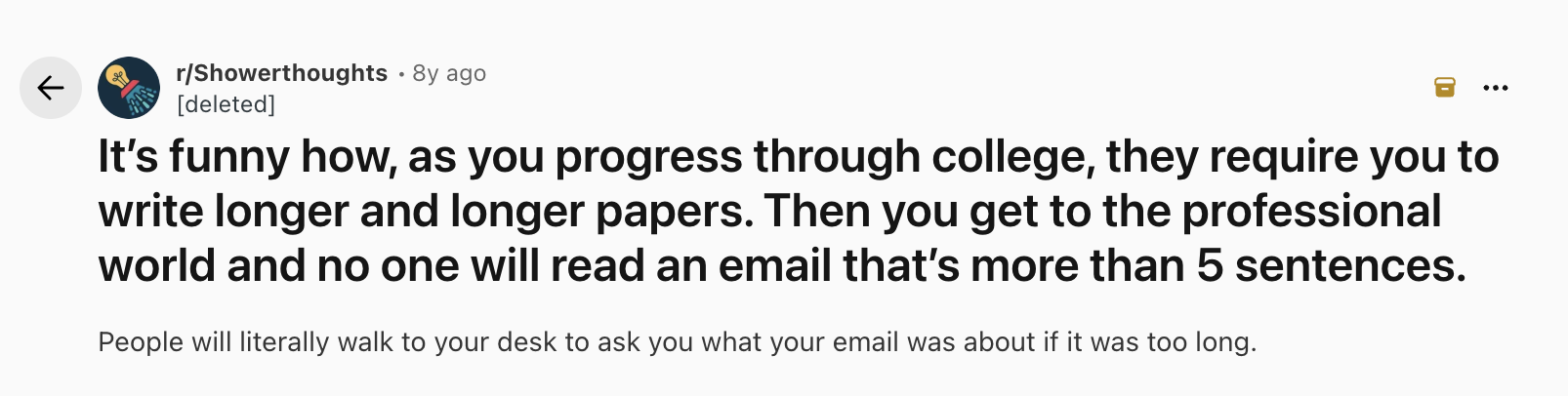
Exercise: For one month, require your team to complete a brief for anything over 500 words.
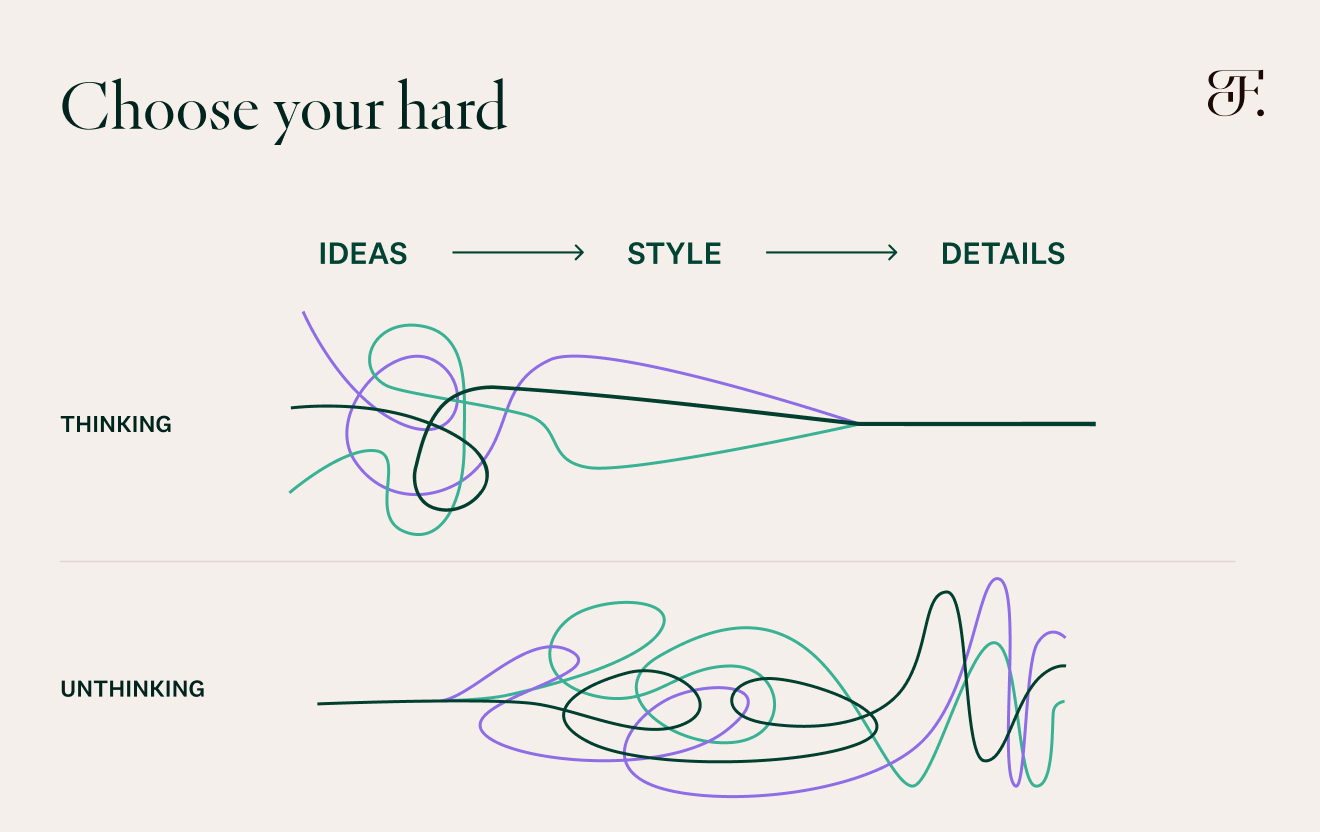
Why: The brief is just as much for the person creating it as receiving it. It’s brain training. Writing is thinking, and in having to explain the thing’s purpose to others, you learn it for yourself—and evaluate it. Plus, if that tiny little brief is enough to dissuade them, it wasn’t all that valuable. Which saved someone else that time, too.
2. Knight every employee a writer
Beware the phrase “I am not a writer.” I used to say it. But this is a fixed mindset, and turns off the part of the brain that learns new information. In one study, students who believed they were not good at a thing showed less brain activity in that area when reviewing their mistakes. This is a self-fulfilling deficit. Believing you cannot write keeps it that way.
But there really is no more accessible craft than writing. Everyone has the tools. They know the grammar. Your team writes daily. You just need to plant the belief.
And heck—they already know clearer writing than the grammarians who used to dock them points in grade school, because all those writing rules were pedantic bunk. The authors of The Elements of Style—the premier such text—violate their own rules within the book. Doesn't everyone know there’s no biblical source of truth in language? Even style guides differ! Language evolves. The only true tell of clarity is, “Did someone else get the message?” And in that regard, your team is already better than academics who study the stuff.
You just need to get your team editing others' work.
Ask: Could I be more precise? (E.g. replace "super strong" with "resilient.")
And, can I say this in fewer words? (E.g. replace "in order to" with just, "to.")
And, could this whole thing be shorter? (E.g. cut the intro; it was fluff.)
When you can spot these deficiencies in others' writing, you cannot unsee them in your own, and the cycle takes hold. And becomes fun.
Exercise: For one month, require your team to respond to every question with, “As a writer …” And to edit everything they write at least once, meaning, 1) write, 2) take time away, and 3) edit before sending.
3. Get good at documenting context
Most of the human experience is undocumented. The feeling of living or having a body, these things are ineffable. And where they are written down—on Reddit, Wikipedia, or Opencrawl, which is where LLMs get most of their information—they are crude simulations. That makes anything an LLM knows an approximation of an approximation within a guess.
So any model you use to write is missing that context of what it means to be human and reason. Which shows.
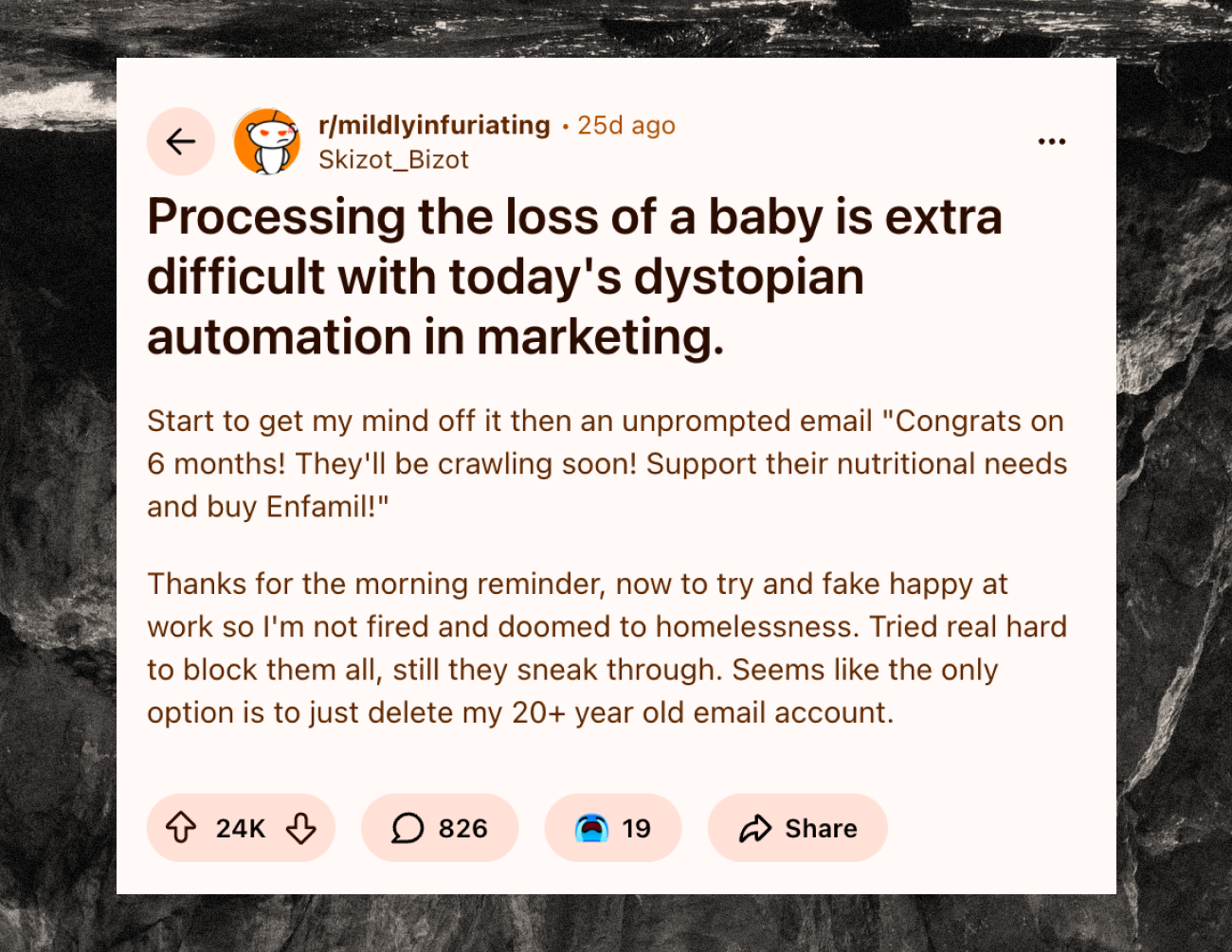
This is how LLMs seem at once, all knowing, and at the same time, achingly dumb. Claude can write you an email subject line that sounds witty but is actually, to some recipients, sadistic.
It goes deeper.
LLMs also don’t know the 99% of the context you have about your work that isn’t documented. They can’t see beyond their surprisingly small context window. They don’t know the last look your boss gave you. They can’t see into your journal. They don’t know what was shown during the meeting. It doesn’t know your career goals. All it knows is what precious little you fit in the prompt.
Yes, you can create “skills” and manage the context. But canny writers have realized that doing so is often more work than just … doing the work themselves.
But in this way, LLMs have been great teachers, haven’t they? They’re forcing more people to document context—rationale, steps, workflows, and responsibilities. And if you’ve read this far you know, that’s great exercise for your brain. Writing and recording are thinking. And when you sharpen your thoughts, that's good for everybody, bots and people alike.
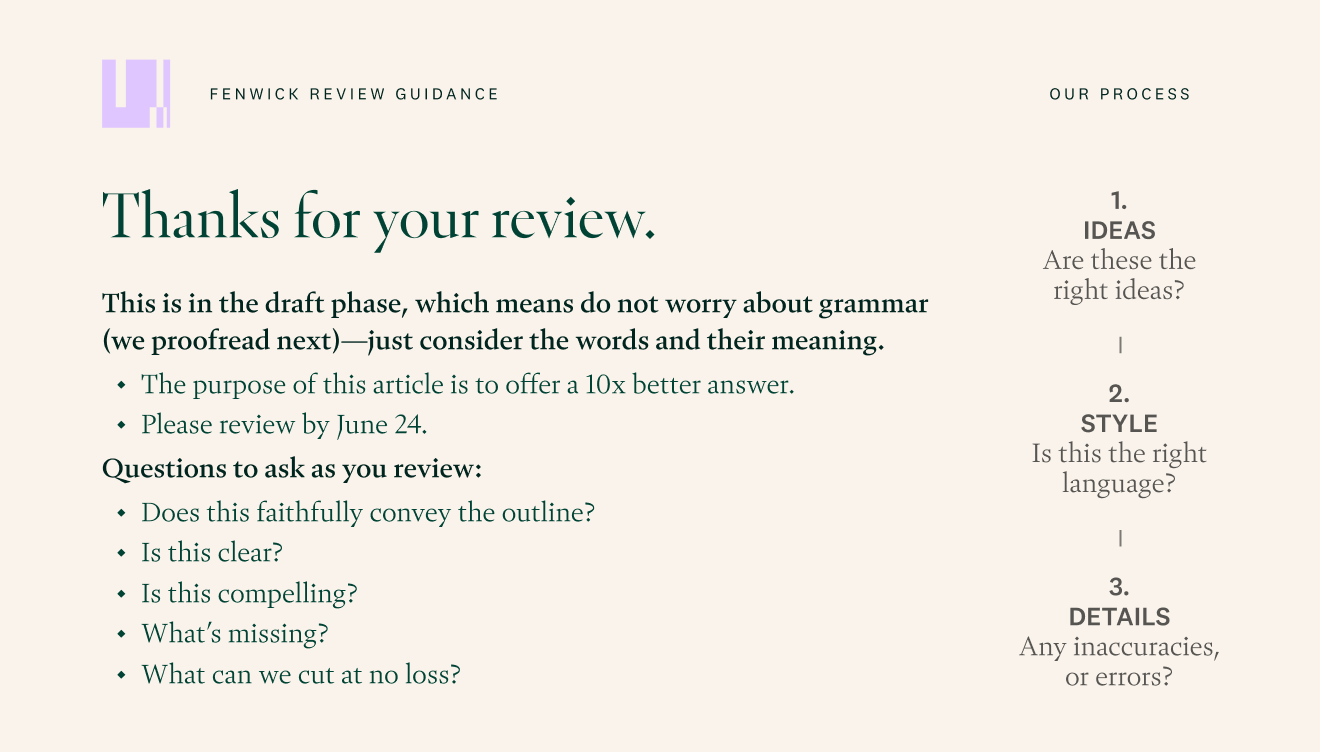
Exercise: Make a rule—whenever someone on your team asks for a review, they must explain what type of feedback they want by completing a “container for feedback,” pictured.
4. Institute a writing process
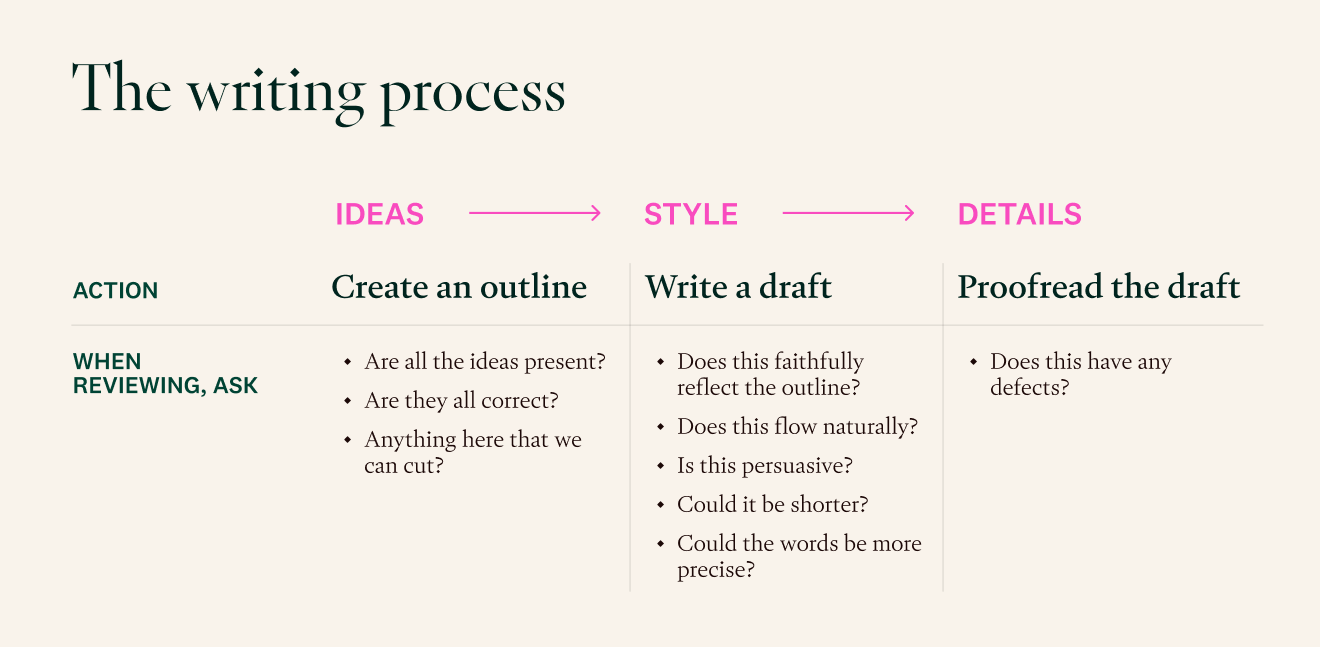
Tried all the above exercises and want more? Institute a standardized writing process, pictured. In it, everyone develops their ideas in an outline before they write. Then they write. Then they proofread.
This may sound obvious, but it’s a time-saver because people often skip the “organizing your ideas” step, and the further along a piece gets, the harder it is to edit. By the time it’s written, it’s carved in stone. And they are defensive about it. Whereas when it’s bullet points, you can rearrange freely, at no cost—emotional or otherwise.
It also allows others into the process. If someone approves the outline but disputes the writing, return to the outline. What did you both miss there? That’s a very different and more productive interaction.
Because of this process, I personally don’t experience blank page anxiety. I let myself remain in that ideas phase as long as I like, consuming articles and videos until a concept strikes me—at which point, the article is begging to be written. I’m just a channel. The story has already formed itself in my head.
Because I’ve done the thoughtwork.
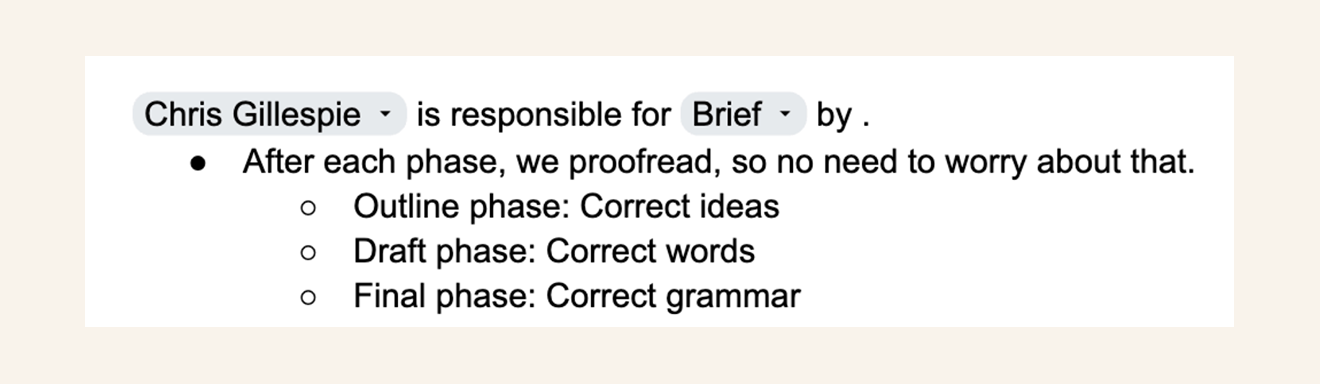
Exercise: Institute this writing process and add these sliders to the top of a Google Doc template that everyone uses.
Clear writing is clear thinking made manifest
Pursue these exercises and I’m confident your team will be excited by how much they already know. Yes, writing is a deep craft, but it’s accessible to start, and all who feel invited in can find fun in improving. When someone gets that bug, it’s difficult to turn off. The cycle takes hold.
Writing better as a team has never been so critical. As ordinary emails melt into tumorous AI treatises, your team can’t risk seeing all that as anything other than simulation, and no progress at all.