

Why doesn’t AI have a childhood?
"There is only one process to ever produce adult-level intelligence," says Vlad Ayzenberg, who runs a learning and development lab studying both babies and AI, "and that is childhood." Humans experience it. Machines do not. It turns out, this process is essential to adult-level reasoning. Join to hear Vlad share about studies of infant cognition that show how to train smarter AI models faster, with far less energy.
A presentation of new research
THIS TALK OCCURRED ON FriDAY April 17, 2026

Vlad Ayzenberg

Eve Eden

Chris Gillespie
TeCH TONIC
A new talk series from The Rewild
These talks are the antidote to artificiality. They invite scientists, technologists, and artists into long overdue dialogue.

Childhood is the only known process to result in adult-level intelligence
In this video, a child displays a level of problem solving capacity that far exceeds any algorithm. The child intuits physics, builds upon past experiences, and solves a puzzle it has never encountered before. “There isn’t a robot in existence that could solve this same challenge,” says Vlad. "There simply is no algorithmic parallel. Yet for kids, this is trivial." That is because children learn how to learn.
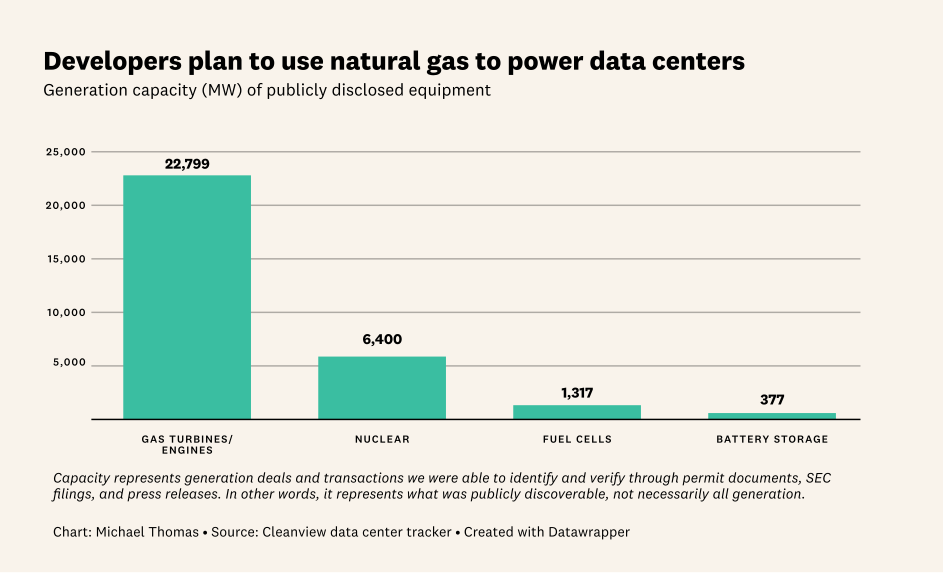
LLMs run on nuclear reactors.
But kids? String cheese and blueberries
The more data you use to train machine learning model, the more accurate it will be. But this tapers off, and they never acquire true reasoning. Children learn hundreds of times faster with shoddier data. If you showed a child a new image every 100 milliseconds of their life since birth, they wouldn’t see as many images as a top-performing model until they were 40 years old. Yet by five, they’re already cleverer.
CHILDREN Learn more, faster
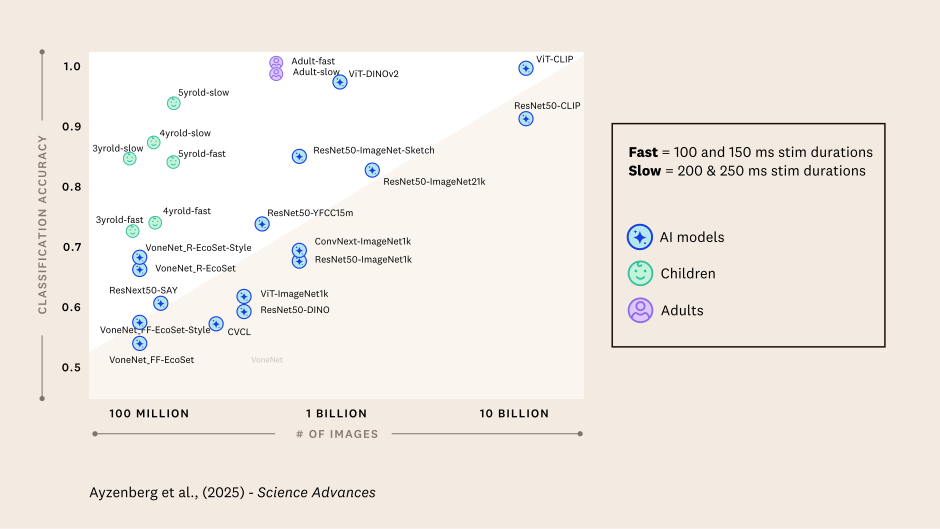
There is something in childhood that teaches reasoning
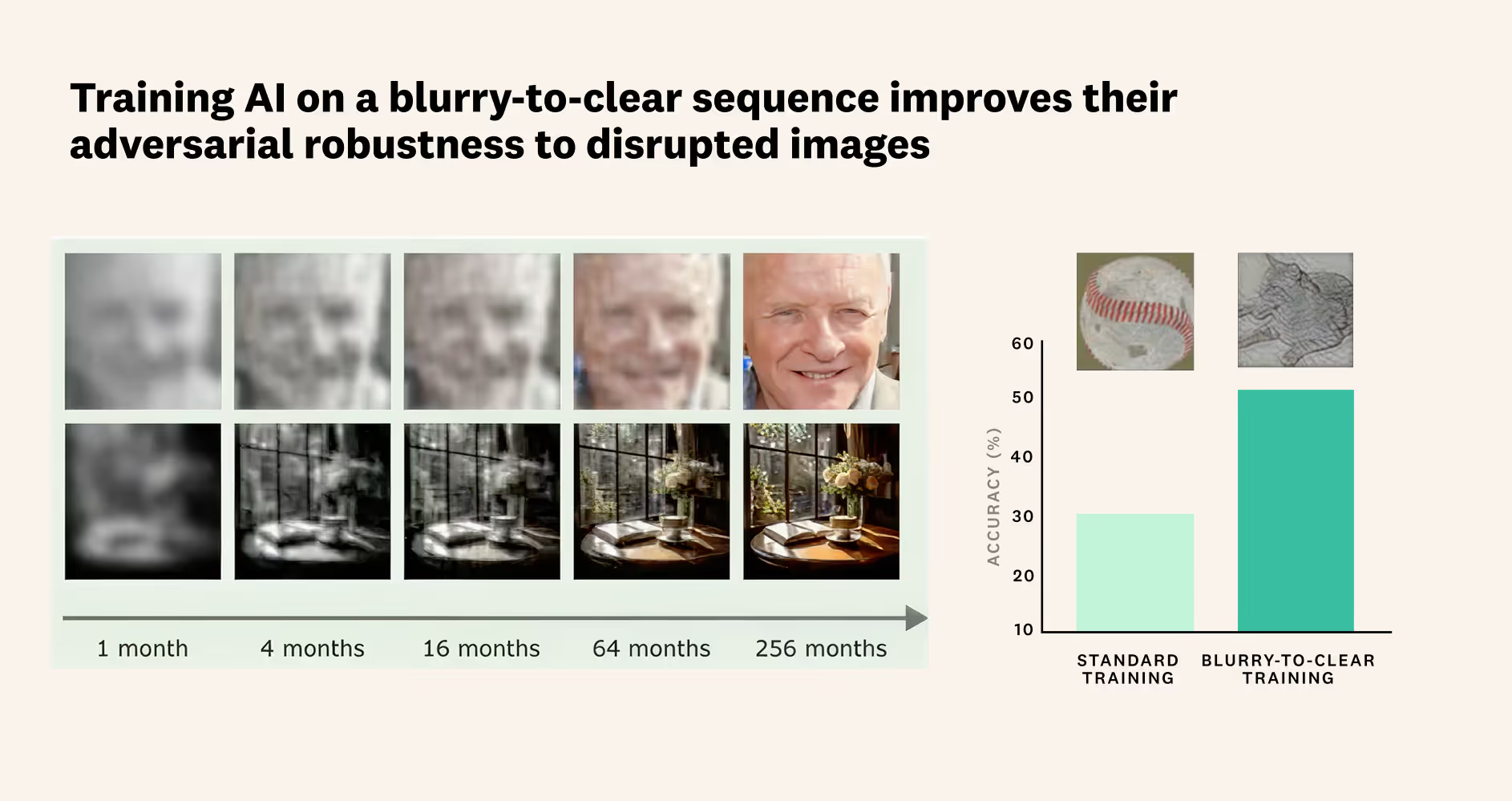
A child’s advantage may in fact be childhood itself. Children have blurry vision and brains geared toward sensation over reason. As new research shows, when we impede models in ways that recreate early infant development, they learn faster with fewer cycles. It’s counterintuitive—what developer would start with a weakened data set?—but it seems that nature knows something.
blur ai's vision and it learns faster
AI datacenters already use as much energy as Japan. What if they didn’t have to?
AI consumes far too much energy and water in a world where those are growing scarce. Join us for a timely conversation about the wisdom nature has to offer us in producing thinking machines that are far more efficient.
The U.S. has 577 datacenters.
668 more are planned

Join the talk
Why doesn’t AI have a childhood?
Watch the discussion around Vlad’s research.
Read the latest issue of Rewild Magazine
Issue 2, Beautiful Conspiracy: What if the world is actually trying to help us?


