Marketing departments today ring with cries of defeatism.
Of course the budget’s cut! Of course nobody told me about that launch! Of course so and so’s on mat leave! Of course of course.
Not of course! Constraints are a gift. Open your eyes to it. Being limited on time or budget is the greatest tool for creativity I have ever witnessed. Most of the big corporates I’ve worked with were sodden with money and nothing cool ever happened. But the startups? With nothing but our wits? We won our awareness through sheer creativity.
In this essay, I explain Fenwick’s four-step pitch process to make dull campaigns lively; to inject a fiery spirit into what’d otherwise be Yet Another White Paper Nobody Sees (YAWNS). I did not invent it. Rather, we arrived at it as a result of the same environmental pressures as a thousand creative agencies before: being handed monstrously difficult tasks with overset expectations.
It is, I have found, a reliable way to occasionally break the laws of budgetary physics.
For this to work, you need an identity
First, let’s back up. Our clients typically ask us to please just make something—to leap ahead to designing a microsite or writing articles. Understandable. But it’s futile if that company doesn’t yet know who they are as a brand.
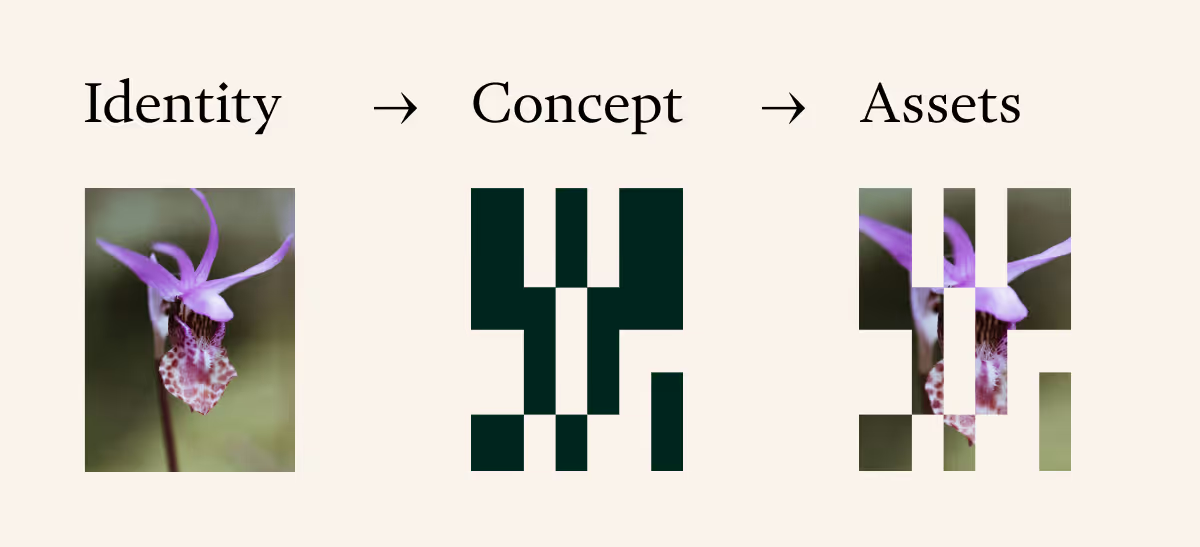
Without a well-founded identity, there is no rubric with which to judge the campaign concepts. Everyone reviewing it will insert random ideas, and you’ll have to run the merciless gauntlet of satisfying each person’s unvoiced, potentially irrelevant, and certainly conflicting personal tastes.
An identity fixes that by creating a rubric: “This is what the company would or would not do according to its character.”
Strong identities are rare in B2B. You can assess one by asking if multiple people independently agree on what the company would like or do if it were a person. If the answers come easily, this suggests there's an identity there.
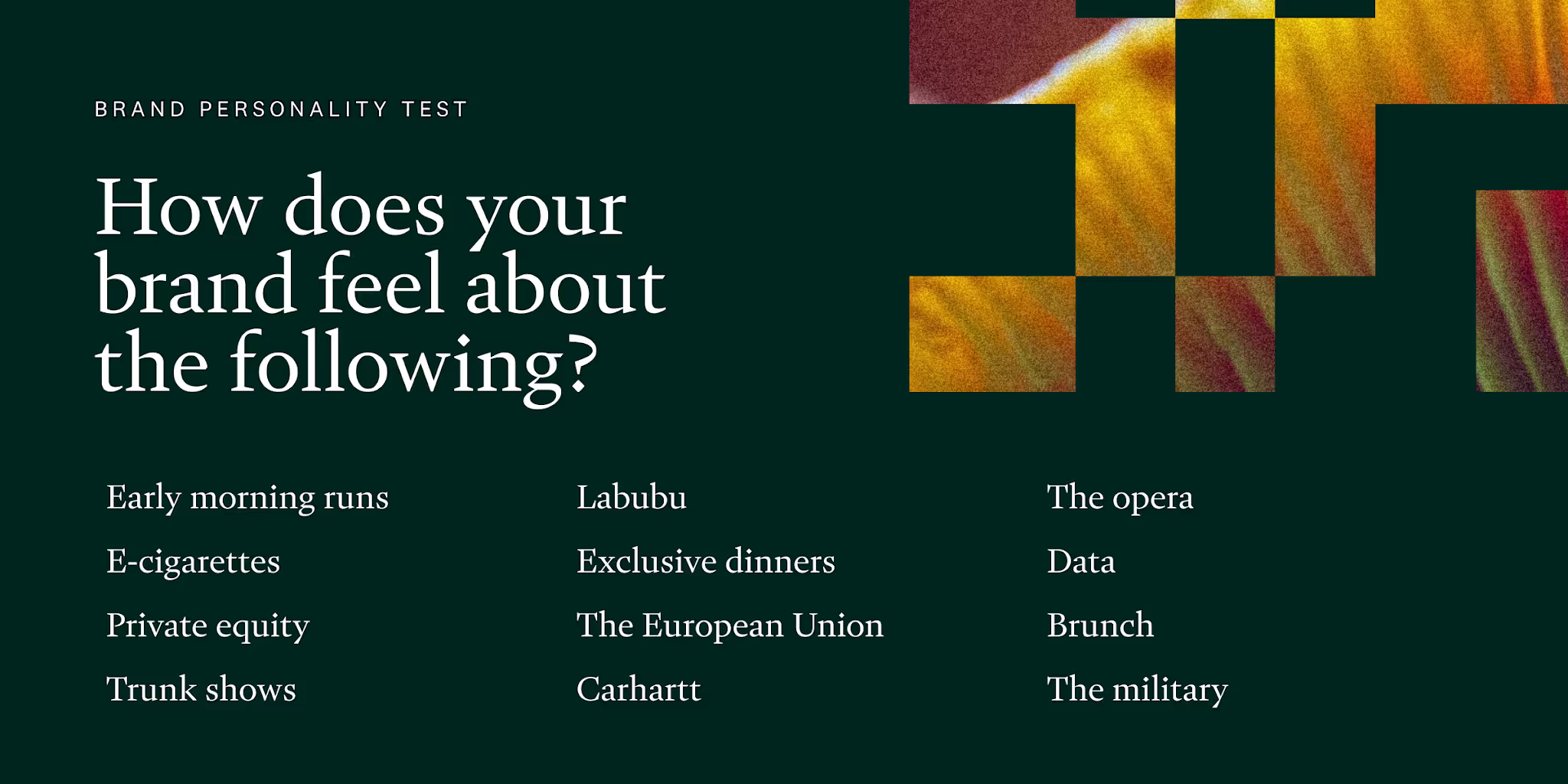
You can also ask whether people know what the company would do if it entered a different market. A classic example: Nike opens a hotel. Marriott produces a shoe. Do you know what each would be like? Probably only one, because Nike has a distinct brand.
That identity is a starting point for judging whether the creative pitch is truthful and likely to work. Then you can pitch.
The 4-step creative pitch process
The pitch is sort of like writing an episode for a show. What happens in today's installment? It can be a side quest or sub-story framed in a one-sentence pitch. Below are examples. Perhaps these don't immediately mean much to you, but rest assured, they make sense in context of those brand campaigns. Note how all four are reducible to a single phrase or idea.

You need that concept if you want your or your client’s message to rise above the din; for them to finally pay attention, and laugh, and share. For example, the campaign below ran in San Francisco.

Another example: A longtime client, Tenovos, approached us with a request for a series of articles about their new product, which is quite cool: It tracks all mentions of your brand around the entire web and scans those images to see if they came from your marketing team. This shows which of your creative assets are actually being used.
But Tenovos knows us, so they asked for creative ideas. Here’s what we knew: Nobody was going to care about the product on the face of it. And it’s almost too outlandish to believe. Plus, Tenovos couldn’t tell real stories of clients because their big clients wanted to stay anonymous. So what to do?
This is the perfect use for a creative pitch.
Step 1: Brainstorm alone
The Fenwick team each starts out working alone, then we combine what we found. I like to begin by reading what essayists and magazine writers have already written on the topic. I look up etymologies (did you know the word “information” means literally organizing? As in “In formation.”) And I ask myself, what’s unique here? What’s remarkable? What’s notable?
I gather my thoughts onto a doc and take a pass at writing 10-12 one-line concepts. Everyone else does the same.
The big outstanding questions
- What are several practical examples of this?
- Why is that so difficult in today’s DAMs?
- How big of a problem is it to our customers?
- Can we listen to sales / success calls about it?
- What kind of workarounds do they use today?
- Who’s our most credible expert on this topic?
Pitch ideas
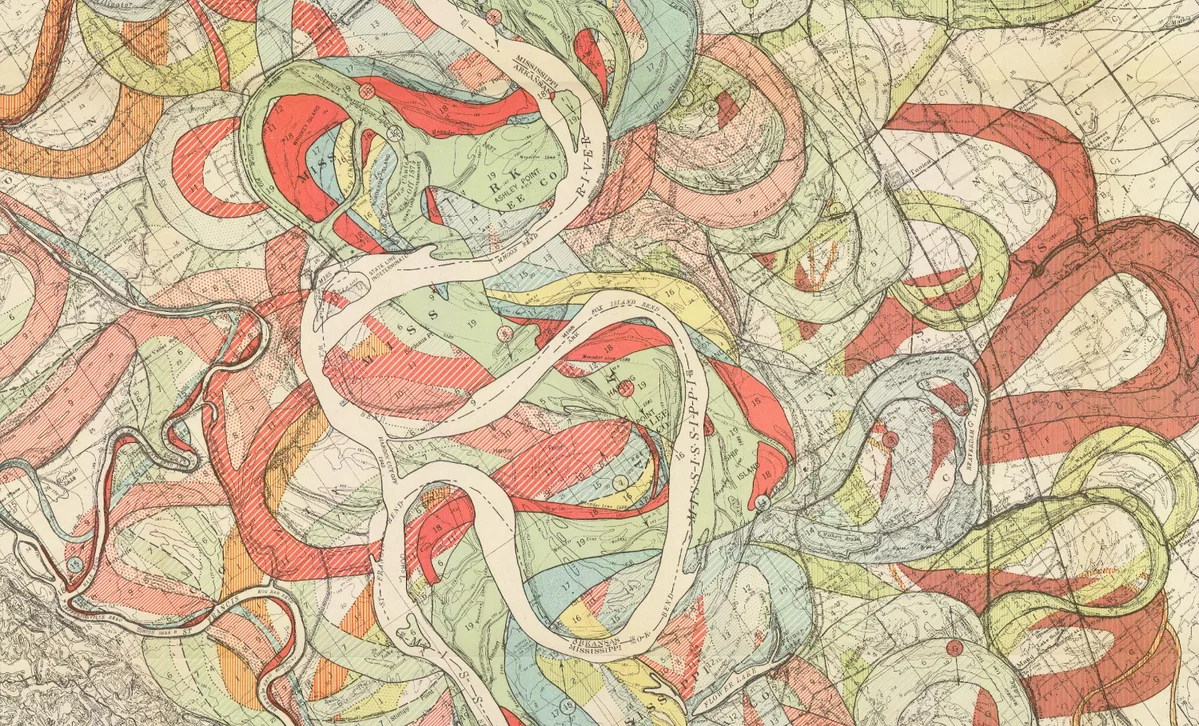
- Through the looking glass
- Where’s my sh*t
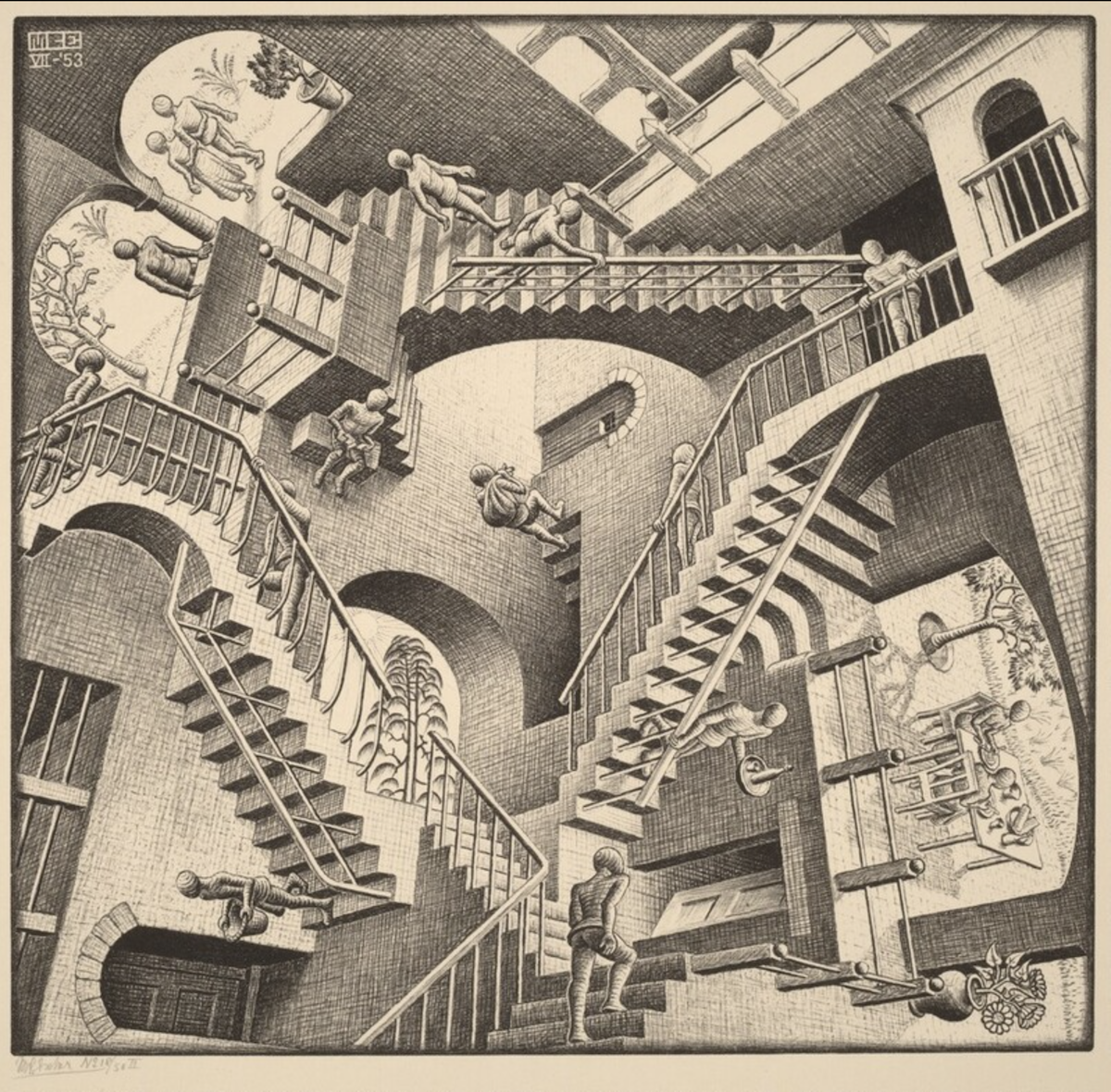
- The creative matrix
- An actual case study of the product
- Provoke: We are my ___
- Cover your assets
- …
Step 2: Pitch each other
We gather the creative team and discuss live. Each person adds their top 2-3 ideas as individual deck slides, each with a title, bullet points, and screenshots.
Have an open discussion. It’s important that each person makes an impassioned pitch for each of their ideas. Others react live and ask clarifying questions.
Go through all pitches in one go, then scythe back through trying to eliminate as many as you can:
- Which can you easily rule out?
- Which garner the strongest reactions? (Divisiveness is good.)
- Refine those concepts live—what would make them better?
Ultimately, whoever owns the project gets to decide. They take the remaining concepts and revise them into just three for the client.
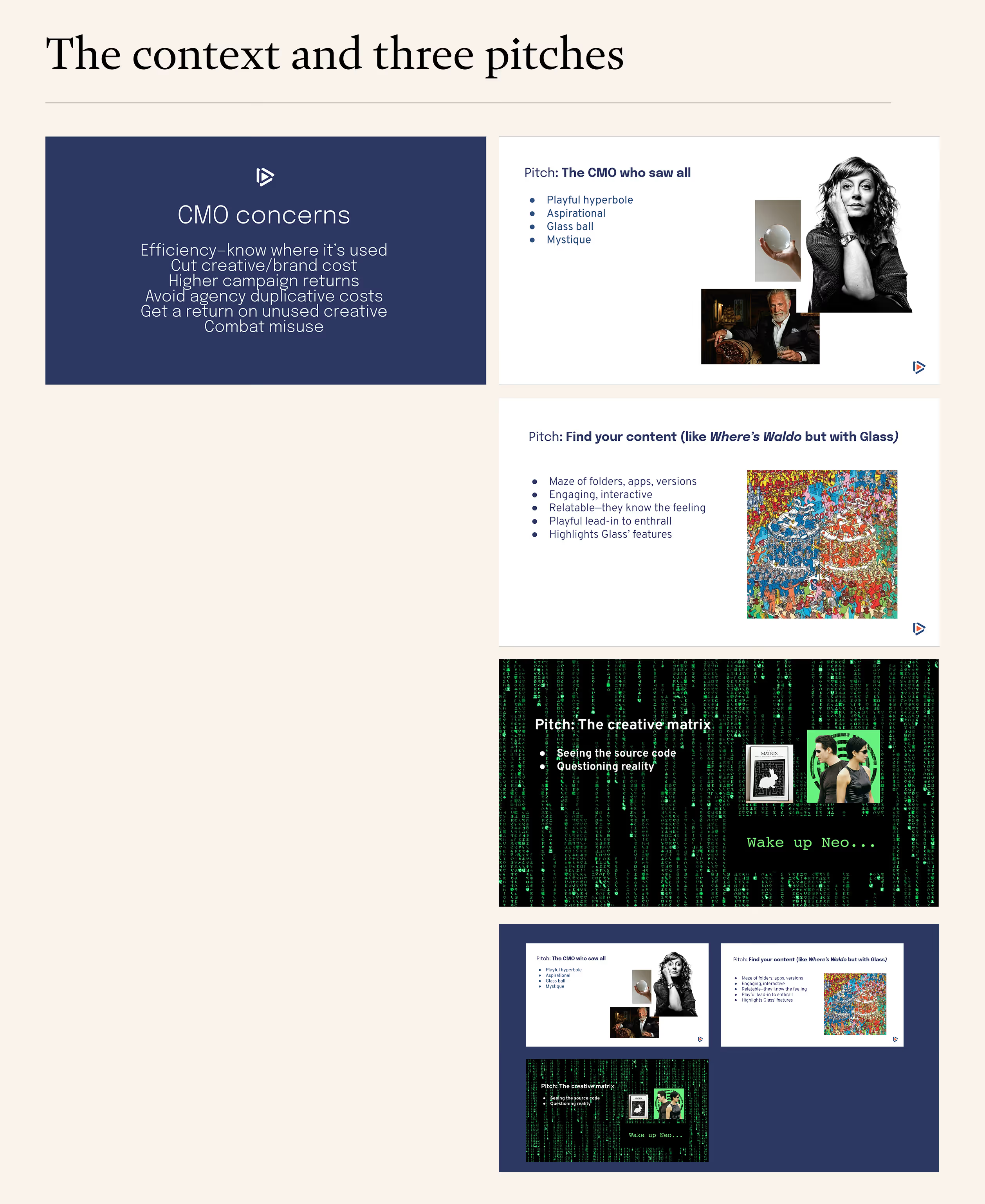
Step 3: Present the pitch
Schedule time to present to the client. Then keep refining until the day of. I find it helps to edit, sleep on it, edit, sleep on it. Throughout this refining, I am asking:
- Is this obvious at a glance?
- Does it spark?
- Are there two ideas here that could be one?
- Is this culturally conscious of their audience?
- Which do I hope they choose?
- If they do choose this, does that make me nervous? Why?
- Has someone already done this?
- Does this frontload the positive part of the message?
- Does someone driving by at 75mph get it?
- If I had to invest my personal savings, which would I bet on?
Then pitch the client. Set a container for the meeting:
There are no bad ideas here and no room for criticism—this is about getting weird. We’ll apply judgment and logic later. We want to hear about how to make these more sensational—not whether they’d work or what they’d cost. We can always find a reasonable way to produce a good idea. We’ll run through all 3-5 pitches and ask them to hold their questions.
Most important, our rubric is this: Our brand is [describe the identity] and our goal with this campaign is to stand out to buyers who are indifferent.
Invariably, the client will ask you to combine several pitches into one. It's up to you whether you honor that—beware them doing it just because they are afraid to let something go; these creative pitches are always strongest if they are singular in intent.
Step 4: Spark test
You are not the customer and thus you must find real customers to ask if this makes sense. Is this as fun or funny as we think it is? I go through my personal network and have the client go through theirs, and failing that, we recruit people from LinkedIn or user interview sites.

And there you have it: A bolt of creative lightning
Finalize the winning concept into a single slide, and there you have your approved pitch. I like to copy-paste onto all the campaign documents, to constantly remind everyone, “This is what we’re trying to achieve.”
And that’s how to fling a bolt of creativity into an otherwise dull campaign.