You don’t need me to begin listing my childhood traumas to tell that I was depressed growing up.
My psychiatrist initially diagnosed me with obsessive-compulsive disorder (OCD), but we now know that it’s more like a complex behavioral disorder with symptoms of ADHD and Autism. To put it plainly, my problem was overthinking.
Thinking too much, often in circles, and usually not about the things that brought me joy. I could never stop the constant barrage of thoughts. They weren’t necessarily all unpleasant, though some definitely were. But mostly they were exhausting to the point of numbness. I could easily spend three hours thinking obsessively about an awkward interaction I’d had five years ago. Or get all riled up for days after hearing some politician make an insensitive comment on TV.
It’s been a long journey to get to the point where I’ve cultivated a safe space for myself. After multiple therapists, a series of drug regimens, and several awkward attempts to twist myself into pretending to be an extrovert, it started—as most good things do—with a good book. I’ll tell you more about it here, on the off chance it helps someone going through similar experiences.
A ballad on small deaths
I grew up between two small towns in West Bengal, India—places of bucolic, harmless, insignificant charm. People who grew up in small towns can probably relate. Yes, it can be simple, close-knit, and relaxed. But it can also be claustrophobic, stifling, and suppress one’s individuality.
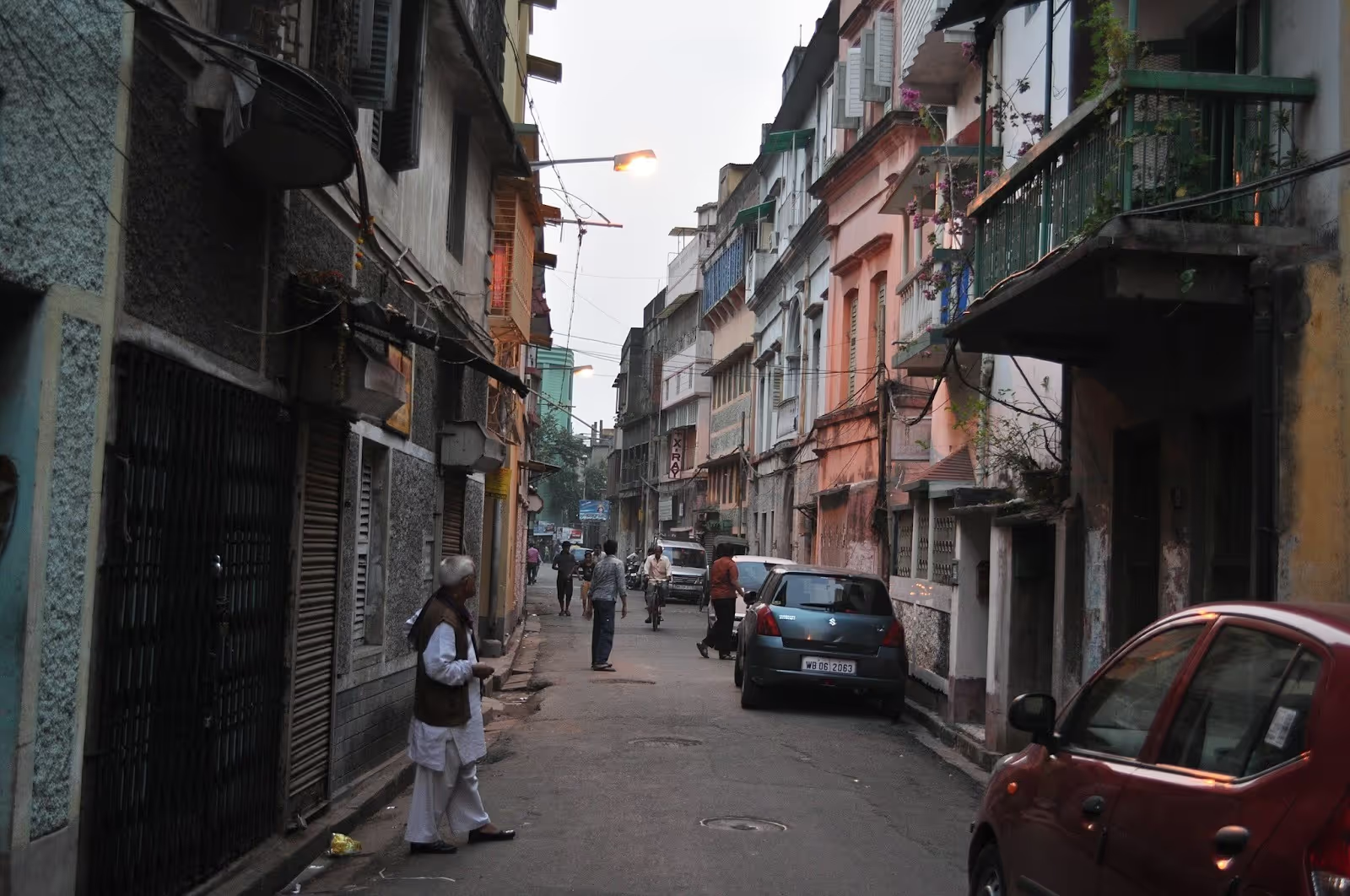
I struggled to make friends. To relate with role models who enamored most people I grew up around. To develop even a passing interest in religion, or nationalism, or the particular brand of academic progression that people around me identified with.
Everyday things that other people found completely normal, to me, seemed meaningless or cruel. Like how boys in my school were so firm in their belief in gender stereotypes. Or how weirdly normalized it was for parents to strike kids.
I should mention here that not everyone from my part of the world will confirm my experiences. There are certainly more progressive circles all over India and in West Bengal. And it’s not like I hated everything about the places where I grew up.
For example, I really liked how much open space there was in my middle school—literally fields, ponds, and hillocks going on in every direction for miles. I was sad that my high school didn’t have any of that when we moved, but it did have a really good library.
Oh, there’s more! There was a time in my preteens when we rented a couple of rooms in this old farmhouse for a while. It was in a patch of countryside that was slowly being assimilated into the nearest town. I could spend hours listening to the birds or playing in the sunlight. There was this local caretaker who I grew really close with. He would help me build makeshift camps out of haystacks every winter where he would tell me ghost stories throughout the afternoon.
But the good times were rare and they never lasted long. We soon moved out of that farmhouse. And my high school grew toxic as many students moved to other schools that followed a more updated curriculum. Most of the time, I felt lonely and uninspired.
When you think too much, everything starts to hurt. That one time you smiled at someone you knew from school and they didn’t smile back? It keeps playing in your head like a bad record. Imagine how it feels then when you have to deal with an actual tragedy. Like grieving the death of someone you cared about or realizing that a family member had dementia.
I didn’t know how to deal with any of it. But other people had plenty of suggestions.
Locally, we have a homegrown brand of spiritual philosophy that’s best understood by reading the works of philosophers like Gottfried Wilhelm Leibniz. Leibniz had ideas like “This world is the best of all possible worlds,” and “Suffering is a part of God’s plan.” It also sounds like something you might read on a fortune cookie from a bad takeout.
There was a period in history under the Colonial British Empire known as the Bengali Renaissance. It was an explosion of social movements and cultural shifts that birthed some great poets, writers, and leaders. Sadly, it also led to a whole new brand of pseudo-intellectualism, a fancier spin on the same classist and conservative ideas.
It didn’t work for me. I could never achieve that “balance” everyone talked about. Antidepressants helped to a point but not all the way. I went to therapy, meditated, even tried my luck at sports. But nothing ultimately solved the feeling of internal conflict from being in a hostile world that I never really understood.
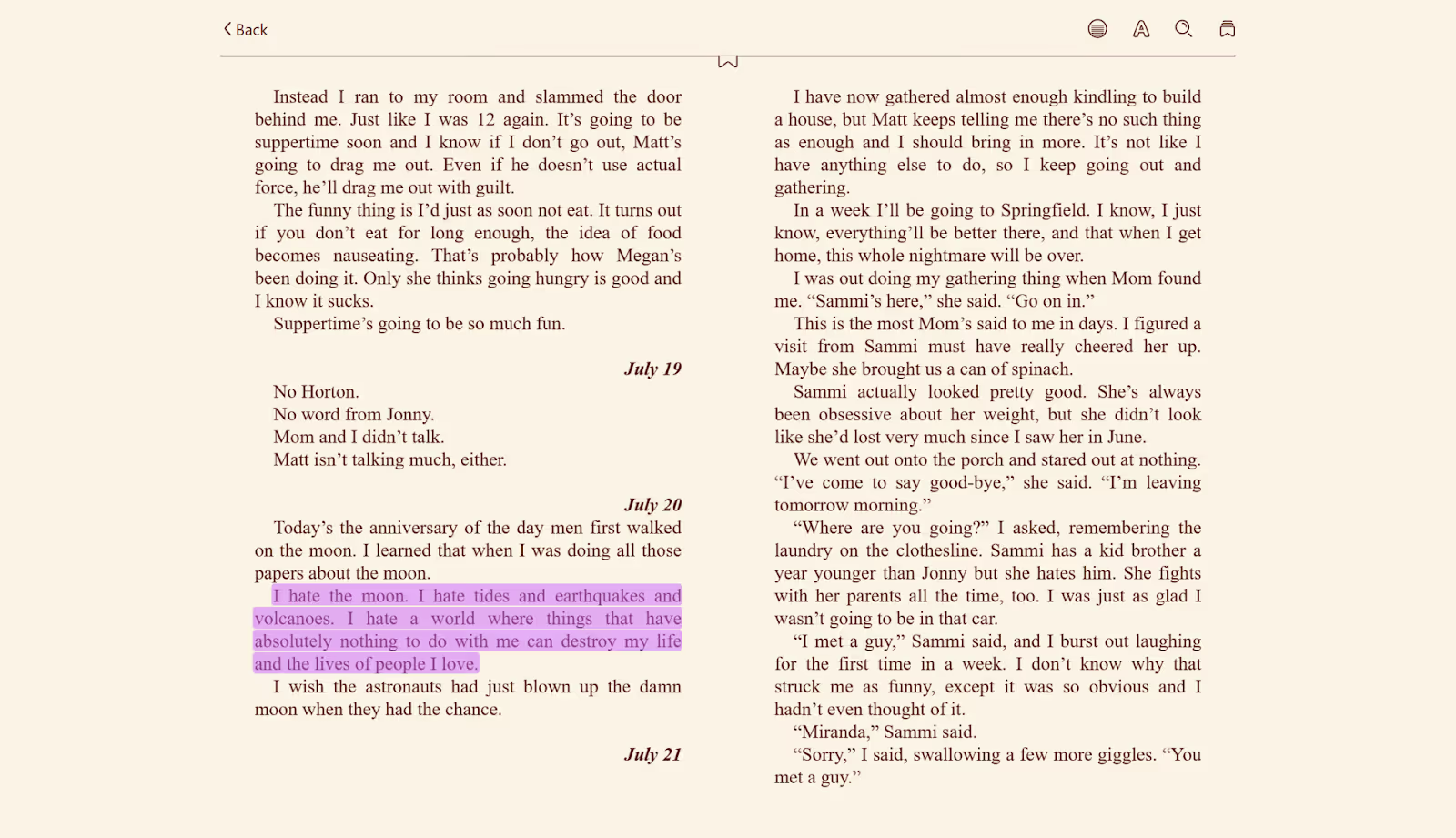
Now, one of my first reads as a teenager was Life As We Knew It by Susan Beth Pfeffer. It’s an apocalyptic young adult novel about a family struggling to survive after an asteroid collides with the moon and starts a series of ecological disasters on Earth. There was this line that really made me feel seen: “I wonder if I'll ever have to decide which is worse, life as we're living or no life at all.”
It’s a tough read. There are times where everything feels desolate and meaningless. I devoured it over a weekend. Something about the way Pfeffer wrote about continuing on past the point of reason, despite the absurd hostility of the world. When everything is literally coming apart around you, what purpose do you hold on to as you keep surviving?
It’s a book about losing hope … then rediscovering it. Learning to find happiness even in the chaos and cruelty of a life upturned. This was the first time I’d heard someone say, “Everything is messed up. You’re not insane. You just need to figure out what you want to keep living for.” And it just sounded right.
I didn’t need to create an idealized version of the world in my head just to keep going. I just needed to find enough reasons here and there to make my efforts feel worthwhile.
Learning to preserve my sanity
There’s been no shortage of public catastrophes in the last decade. Climate disasters. School shootings. Trump. And we’re often led to believe that our only choices are to either give in to the depression and anxiety or completely ignore what’s going on by finding an alternate belief system that desensitizes human suffering. But it doesn’t all have to be in binaries.
I won’t say that reading a single teenage science-fiction novel changed my life. But it was enough to make me curious. How could I find ways to deal with my condition without pretending to be someone I’m not?
There are a few ways I’ve learned to insert more meaning into my life. It started with being conscious of my thinking patterns so I’m not losing myself to obsessive thoughts. Then, I taught myself to appreciate little victories like a kind word from a co-worker or a walk in the park around sunset.
Over time, I read books that felt cozy or hopeful more often. I began writing, first as a hobby, then as a full-time career. I found that I enjoyed listening to songs by artists like Aurora, Yaelokre, and Imaginary Future. During a family trip last year, I trekked 500 feet up a mountain to watch the sunset in Phraya Nakhon Cave, Thailand (on my first ever hiking attempt)!

At work, it’s crazy how creative I could be the less I was dealing with constant anxiety or existential dread. Since my mind wasn’t wasting all its energy thinking about the same unpleasant things over and over, I could now write more without burning out.
That led to more consistent client work. And with the reduced financial pressure, I also started taking on more reporting projects and discovered my love for investigative journalism. Earlier this year, I even launched a newsletter to discuss all the things I feel strongly about, like gun control, Dungeons & Dragons improv shows, child rights concerns with generative AI, or Swedish folk music.
While the self-care habits reinforce my sense of place, I can’t help but think that the reason I’ve been able to get this far is because of a fundamental shift in my belief system.
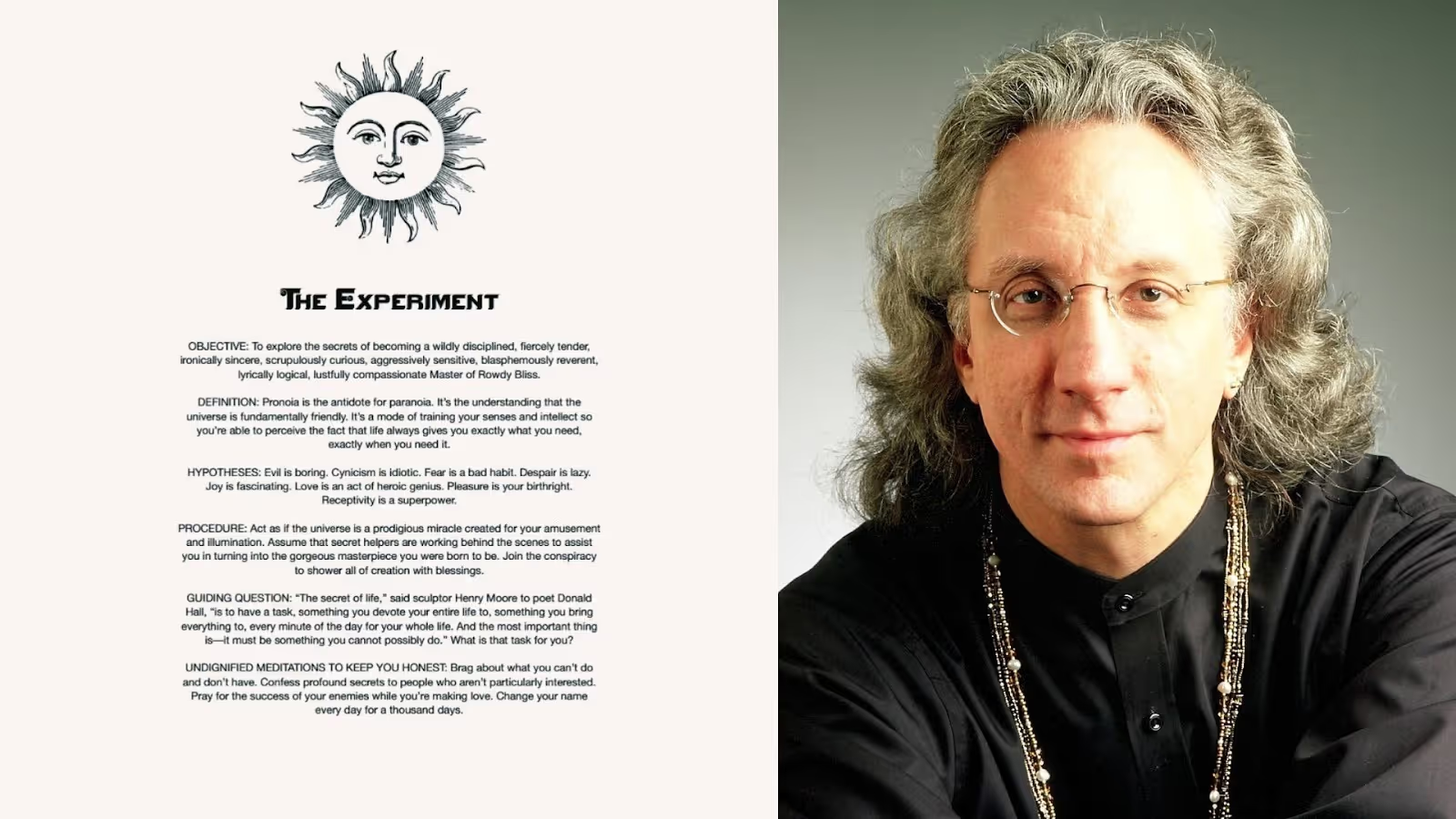
It’s just as well that this issue of Rewild is about Pronoia. It’s a Greek word (πρόνοια) that roughly translates to “providence.” Now, I’m still way too jaded to embrace the idea that everything always works out for the best. So I prefer Rob Brezsny’s definition: “Pronoia is the antidote for paranoia. It’s the understanding that the universe is fundamentally friendly.”
Brezsny is a horoscope columnist who believes in free will. His work was seen as so scandalous by the astrology community that it earned him a chiding from The New York Times. And his advice isn’t to embrace toxic positivity, but to acknowledge the psychological toll of cynicism and learn to be more conscious of the positivity around you.
Reading his book, Pronoia Is the Antidote for Paranoia, I found that it shared an uncanny resemblance with how I managed to find some sense of peace growing up. You can’t deny the bad things that happen in the world, but you shouldn’t romanticize them either. You can carve out your own safe space by surrounding yourself with things that bring you joy and thinking about whatever makes you happy.
For every would-be dictator, there are millions of protestors. Corporations bleed the earth dry of its natural resources, but independent artists dare to speak out against them setting aside all fear. Comedians are selling out to the Riyadh Comedy Festival and did you know there’s a trans-led cabaret troupe in Bangkok that’s dispelling LGBTQ stereotypes manufactured by Thailand’s sex tourism industry?
There’s a word for it, ‘anti-fatalism.’ It means paying more attention to your choices and creating an individual sense of purpose to build a shield that protects you from feelings of alienation and pessimism. You could find similar ideas in the works of Franz Kafka or Aldous Huxley. (It’s probably a bit weird to put those two novelists in the same sentence, but there’s a strange point of confluence in how they both saw the world once you get to the crux of their shared conviction about free will and human agency.)
I won’t pretend I’ve got anything figured out. There are still days when the depression hits way too hard for any kind of reasoning to dent.
But there’s a beauty in simply acknowledging all that is, while also actively looking out for things that give you a reason to get out of bed in the morning. Yes, the world can be cruel and awful. Noticing means you’re sensitive. You just don’t need to make that observation your whole personality.
That’s been my experience, anyway.