I rarely encounter a style guide that isn’t in some ways tedious.
Either it’s a locked PDF full of soaring but empty adjectives (what is it to be “human but relatable,” exactly?) or a sprawling ‘living document’ so thorough, it is impenetrable. In the end, they are really only useful to the person who created them.
And if we were really being critical, and I suppose we now are, I don’t think most style guides define the company in ways that are all that unique. They’re all a smudgy version of “human but relatable.”
That being the case, I offer you the template we give to our clients. It covers the generic, clear-writing basics so you can skip that and spend more time on the personality-defining part and make something characteristic and unique. Please. Edit it thoroughly. Don’t wind up like dozens of undifferentiated others. Dare. Be weird. Be memorable. Send me examples.
And run tests with other people. There is value in a style guide only insofar as it gets used.
But first, Fenwick’s style guide rules
The primary point of the style guide is to make you unique
With so much LLM search, it’s more and more common that your brand identity will get flattened into whatever font that platform uses. Which means written style is the one thing that can survive. The Ann Handley test is more important than ever: If someone removed all branding, would they know it was you just by how you write?
Spend more time on your style guide defining that difference rather than the similarities. Hence this template.
The style and brand guide should live in one document
This is unorthodox, but if you do not fuse your trinity of a) brand identity, b) brand messaging, and c) writing style into one document, no one working with your brand will ever know the full thing. People will only ever read the document most relevant to them, and gain only half-formed ideas from it. Yes your teams can thereafter chop that primary document into quick reference guides, but they cannot separate the core bible.
When they are combined as one, your one unified guide gets to be an auto-demonstration of your style. It explains your brand in your voice, so readers can really soak in it. There is no better way.
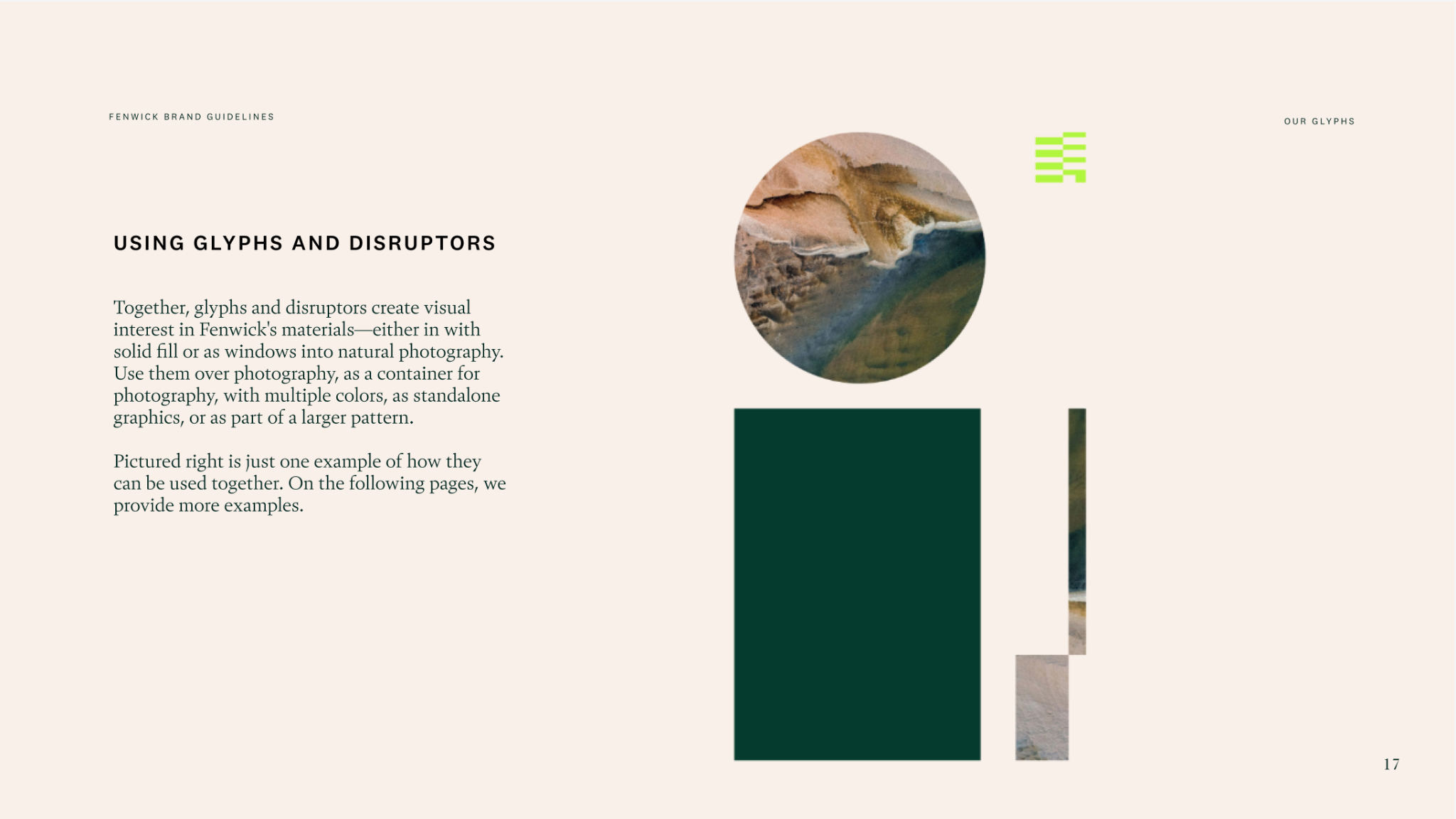

The style extends directly from the brand identity
You cannot create a unique style separate from the visual identity. Or rather, you can, but it will always feel forced. That identity should be illuminated through character anecdotes, just like a fiction author does. It should be short, vigorous, and punctuated with tiny stories and observations.
By the end, someone who’d previously not known it should reliably be able to say, “Oh, the brand wouldn’t like that, but they would like this” with regard to nearly any topic. For example, “This brand would be found at a taco truck at 3am.” Or, “No, the company would never be caught in an ascot.”

It should be riddled with examples
Never tell readers to be “clever” or “willful” without showing. Words are terribly imperfect instruments and unless you model the work, you invite a menagerie of nightmarish interpretations.
This is all very difficult to dream up during the style-writing process, I know, which is why these things are better discovered than invented. Pore through existing materials asking for reactions. Then, move in anelliptical fashion—invent a rule, apply it, then update the rule based on how that turned out.
The ultimate test here is, can someone else read the guide and reliably inhabit the character?
The style guide template (copy and customize)
⚠️ You must customize this portion with your personality. It is only for show.
Identity: We’re the gum-chewing masters of routine air travel. We inspire so much trust, our passengers can recline and fall asleep.
- Frank—To the point. Use active voice and few adverbs. “Finances should be simple.”
- Plainspoken—Jargon-free, universally clear. It’s “invoices,” not “accounts receivable.”
- Approachable—We’re friendly with a winning smile. People confide in us. “Good on ya.”
- Commanding—We aren’t afraid to wield our authority. “You best not mess with the IRS.”
- Informative—We know lots of facts. “Treat IOLTA as a debt. (In finance, we call that a ‘liability’).”
- Fun—We’re in such control, we can find moments of levity. “I could tell you a joke about debits but only if you give me credit. Get it? It’s funny because … anywho, taxes.”
Notably absent here: Friendly. We don’t ingratiate business owners by calling them “heroes.” We are here to get you to your destination. We don’t need to be loved by everybody.
The Fenwick clear writing rubric
Be precise
Use exact, unambiguous words, avoid clichés, and establish a setting.
Be concise
Hurry to the point and minimize adverbs, nounings, superlatives, redundancies, floridness, and double negatives.
Be easy to read
Readers should need no special knowledge nor have to look things up. We prefer active voice, define jargon upon first use, and offer context.
Be evocative
Engage the senses, vary the structure, and use storytelling devices.
Be helpful
Always aid your reader in a present goal.
Be honest
Avoid fallacies, bias, and hyperbole. Cite your sources.
General writing
Keep it simple
We always prefer a short sentence over a long, stuffy one. Same with words
Front-load the meaning
To be ultra clear, we begin paragraphs with the most important thing. For example, rather than Slack someone a long story that ends with a request, we’ll start with the request—“Do you have 30 minutes to help?”—and work back. So too in emails: Start with what matters, which most often, is the benefit for the reader.
Write like you talk
If you wouldn’t say it in casual conversation to a friend, find simpler wording.
Check your facts
We take great pride in knowing the truth and citing our sources.
Write in active voice
Say, “I checked the facts,” not, “The facts were checked by me.”
Always edit
Never submit something unless you’ve read through it carefully.
Avoid adverbs
Those are words that modify other words, like “very,” “super,” “basically,” etc. There’s usually a stronger word. For example, replace “very fast” with “quick” or “hasty.”
Leave room for doubt
We like to say “often” or “sometimes” because absolutes like “always” or “never” are rarely true.
Eliminate jargon
Avoid using industry-specific words that others won’t easily understand.
Eliminate cliche
These are words and phrases that are used so often, they’ve lost their meaning, like “Circle back” or “Let’s double-click on that.”
Fight statistical exaggeration
Statistics have a way of growing more extreme the more they’re shared. Keep yours honest, even if it means they require more explanation.
Check your homonyms and homophones
These are words that are pronounced the same but spelled differently. E.g. they’re and their.
When in doubt, delete the word “that”
“That” tends to get overused. If you can delete it and a sentence reads the same, leave it out.
Double-check all pronouns
If it’s not clear what your “it” or “that” is referring to, bring the noun up again.
Be specific
Is it a river or is it the Nile? Is it a truck or is it an eighteen-wheeler? Specificity forms the image.
Hyphenate modifiers
Radio was invented in the 19th century; your grandfather collects 19th-century radio sets.
Limit exclamation points
One per article is plenty.
Check adjectives
Are they all necessary? Would a more specific noun choice be better? Is it a big house or a mansion? A brimmed hat or a fedora?
Eliminate lookups
Someone shouldn’t have to click to understand. Provide that context in the text.
Trim your lists
If you’ve listed three things that are synonyms, pick the best and delete the rest.
Kill your darlings
Don’t keep something because you like it; keep it because it works.
Use diverse examples
If inventing names, mix them up. Don’t just stick to Anglo-Saxon Jacks and Jills. Same with genders and ages.
Reframe negative statements to be positive
For example, turn “no shipping fee” into “free shipping.” It’s shorter, more accurate, and more enticing.
Name your images and provide metadata
For example, if you include an image, name it like a rational person and provide metadata in the copy doc.
Things to avoid
Harmful, toxic, or questionable language such as “blacklist,” “swarthy,” “high-brow,” or “dame.”
Gendered terms such as “Hey you guys” or “man hours.”
Alienating words or phrases especially those that apply to marginalized groups. E.g. “Driving blind.”
Sports analogies. They can be alienating, especially if used in excess.
Figures of speech that refer to war or violence, like “spray and pray” or “in your arsenal.”
Opening articles by assuming something about your reader, like, “You are a startup founder who didn’t raise their round.” It’s obnoxious.
Putting sensitive information into AI tools. When in doubt, don’t.
Words and phrases we dislike
Say “use” instead of utilize, always. Utilize need not exist.
Say “lessons” instead of “learnings.”
Instead of “optimize,” describe what you mean.
Never use “value creation.” Besides being a nouning, it’s hopelessly vague.
Never append “business-” onto something such as “business-idea” unless it absolutely does not make sense not to do so.
Avoid appending “-led” to something, like “product-led.” There’s usually a simpler way.
Specific terminology
We prefer “profit and loss statement (P&L)” to “income statement,” but we can use both and consider them synonyms.
We write out “cost of goods sold” unless the reader already knows what “COGS” is.
We cannot say "financial advisory" according to the legal team.
Grammar and the finer points
Use American spelling.
Avoid emojis.
Spell out numbers 1-9, use numerals for 10 and above. E.g. Nine questions, 10 posts.
- Exception: If it’s a range, like 1-9, use numerals.
- Exception: If the number starts the sentence, spell it out.
- E.g. Forty-five percent …”
- Instead of “%,” use “percent.” E.g. 45 percent.
Use sentence case for titles, headlines, and subtitles, meaning we don’t capitalize every word.
Use the serial comma, like so: this, this, and this. (Though do not let it become your personality.)
Use an em dash without spaces (—), not an en dash (–) or em dash with spaces ( — ).
Spell out most acronyms on the first use. E.g. Account-based marketing (ABM)
Capitalize people’s titles if they appear alongside their name. E.g. Sooma, Director of Marketing.
Upon second mention, use the quoted person’s first name. E.g. “... says Donnique.” Exception: If two people have the same name or if the first mention was so long ago, they might have forgotten. If starting a new chapter of a guide, reintroduce them as if for the first time.