Marketers keep sending me notes that say something like, "My writers no longer know how to write without AI."
“When ChatGPT is down, they are paralyzed," they say. "When higher-ups ask why they chose something, they freeze. I don’t have time to teach them. Help?”
I wrote this up as a LinkedIn post and it reached 50,000 people. Hundreds commented and their replies richochet from agreement (“I’m seeing this”) to schadenfreude (“fire them and hire me”) to fear (“I’m worried about the kids”).

I am biased, but I think we are right to worry. Marketing leaders fret that their employees aren’t maintaining their writing skills. But those leaders aren't investing the time either. Everyone's abandoning the thoughtwork. It’s a great sloughing off of responsibility to a little goblin-loving word predictor which, as we will explore, steals with glee.
Writing is thinking. Thinking is work. Skills don’t emerge from avoiding this cycle.
I for one will continue practicing writing the old way because it is hard. Because I know that it's only through fruitful strife that I'll fight cognitive decline. Shortcuts dull the mind, which is exactly what LLM model makers want, by the way: an enfeebled population who they can sell brainpower back to as a utility. (I am not exaggerating.) Each of us now are at a crossroads. Will we succumb to haste and lose our powers of independent thought? Or will we commit ourselves to forever learning to write better?
We're about to need brain gyms
Mental skills atrophy faster than you might think. One study found that thousands of civil workers suffered a 38% decline in verbal memory and abstract reasoning within one year of retirement. Those individuals seemed to have thrived for 40 or so years of work, accumulating whatever powers of cognition kept them employed. Then, once free of that pressure, one-third of the gains drained out their ears.
A 2025 MIT study measuring brain activity confirmed this can occur within hours. Researchers asked three groups to write an essay—one group with an LLM, one with a search engine, and one without assistance. The more helpful the tool, the less brain activity that group showed. And also, the worse their output and they less they could even recall what they'd written. Said the study’s authors: “The LLM group also fell behind in their ability to quote from the essays they wrote just minutes prior.”
Easy come, easy go.
These pressures operate on our entire bodies: A reasonable degree of daily burden keeps people physically healthy. I will avoid over-romanticizing our forager past, and yet, studies do show that hunter-gatherer tribespeople like the Hadza in Tanzania do not experience age-related decline in the same way we do. Seventy-year-olds remain spry and still carry their own weight, literally. Among studied Amazonian tribes, dementia and Alzheimer's are nearly unknown and not for a lack of diagnosis—they've more anthropologists about them than birds. It’s because people in these societies have no choice but to stay engaged in the cycle of life-giving strife. Disease and danger aside, some environmental friction is good for the brain and body.

Let the scientists spar over the mechanisms at work here. To me, the outcome is clear: We lose what we do not use. And already, our society’s writing skills have atrophied greatly.
No, the English language is not under assault by foreign loanwords. That hokum is as old as the language itself. Rather, what I am claiming is that the less thought we must invest into our writing, the less free will we exhibit. As modern conveniences buffer away friction, they dispose of writing’s cognitive exercise. Writing by hand activates more areas of the brain and creates more connections and new ideas than typing. In turn, I’d argue that typing at least uses muscles. I fear for those now primarily dictating to their phone—or aspiring to do this subvocally.
AI proponents liken LLMs to mana from heaven. But view it as a trade of mental fitness and it’s hard not to see it as theft. The less we must use that psychomotor connection—the less we fret over word choice or recall grammar—the less we retain it. And the faster we careen into a future where our flubby brains cannot rise to our own defense.
The less we must use that psychomotor connection—the less we fret over word choice or recall grammar—the less we retain it.
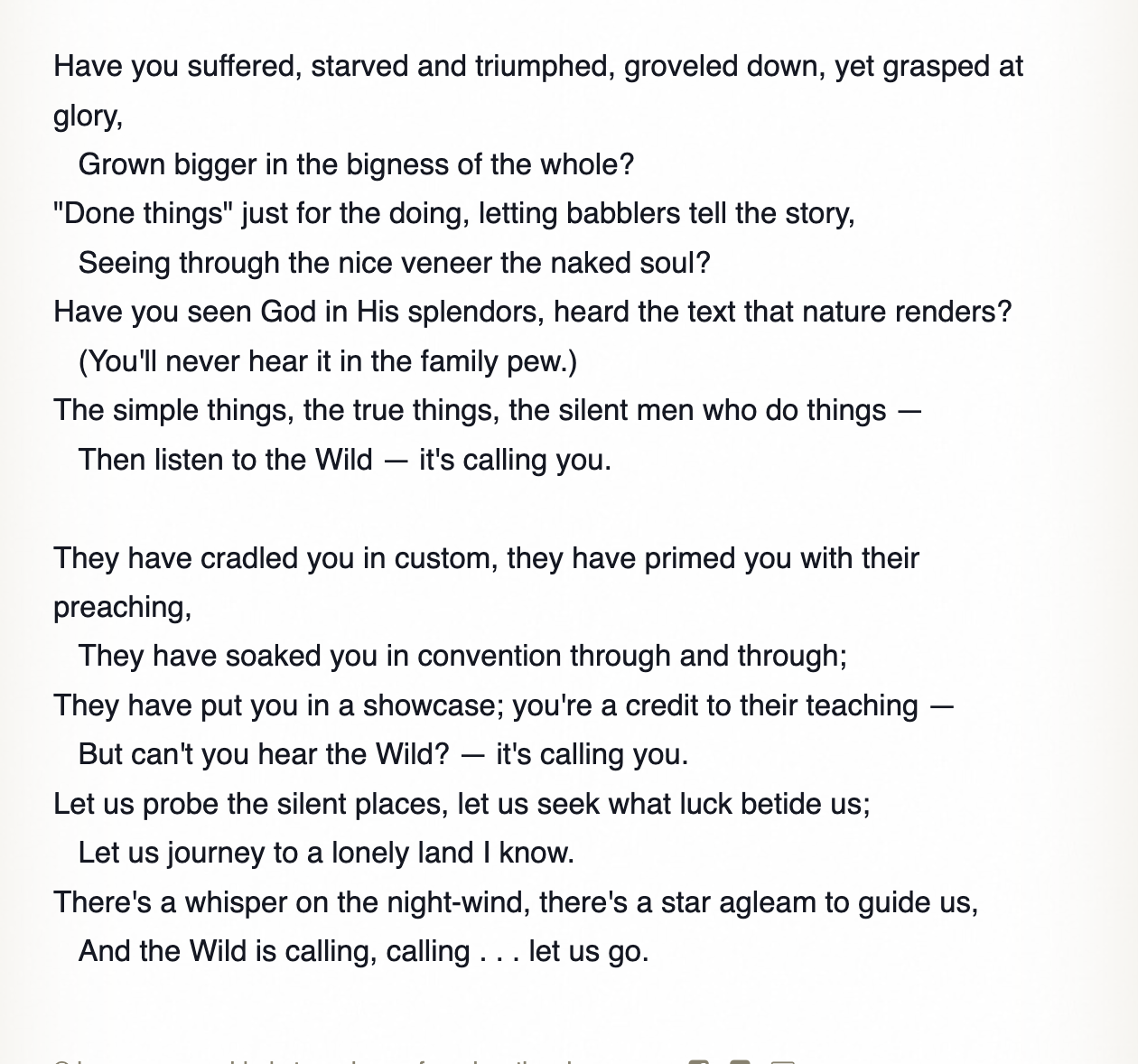
Whereas when the opposite happens, when people must lightly struggle in work, they accrue wisdom, skills, and sense. I like how the poet Robert Service put it in his poem, “The Call of the Wild”:
There is, of course, a paradox to this. How can we seek to grow more efficient while knowing some inefficiency is good for us? I don’t have an answer. But I do know that when it’s present, great skills of mental fortitude emerge.
There is a reason the 1860s in the United States produced such a prolific crop of writers including Whitman, Alcott, Melville, Thoreau, Sedgwick, and hundreds more: the sudden imposition of constraint. Millions were strewn about by the Civil War. To attain the fraternity all humans want, millions of people had to write each other letters. These letters were painfully asynchronous—you couldn’t know when or if yours would arrive, and you had no way to clarify; thus, people sweated greatly the meaning of their communiques. You had to write legibly (engage the brain). You had to be clear to others (develop a theory of mind) and use the page judiciously (self-edit). This produced epic thinkers capable of novels that still crowd your local school’s reading lists.
But remove all the constraints and you get a retirement of the mind that I think we now all face. The abstract reasoning is pouring out our ears. Can you imagine the literature a ChatGPT generation will leave behind? Writers unable to recall what they, moments earlier, “wrote”?
Great writers knew to fear this siren's song, but in the early days of ChatGPT, they were shouted down as Luddites. You know how they say that those who don’t study history are doomed to repeat it? Well those who do are generally doomed to watch others repeat it, and so here we are. Study after study shows that it’s bad for our brains and people are starting to panic.
And so, now is our time, writer friends; it’s time to teach the love of the craft. And first, let’s all remind ourselves what it is and isn’t.
Writing is the mechanical act of thinking
Writing is not ejecting words onto a page. It is better thought of as the mechanical act of thinking. Sometimes, it leaves words for others to follow. But its real value is the psychic exercise and turning over of ideas, as any avid journaler knows. It’s taking a revitalizing stroll through the garden of your mind, pruning and picking. Most journalers commit words knowing they’ll never be read; the emission was enough. The intellect was engaged.
Writing is not ejecting words onto a page. It is better thought of as the mechanical act of thinking.
But sometimes your writing is intended for others. So you edit. You rewalk your ruddy thought path and leave behind boards. Then bricks. You consider the slope and cut drainage. And after sleeping on it, you re-meet your creation and exclaim, “Oh my!” All this winding work and I could have just made a bridge. So you raze and raise and improve the land to its highest form so others may walk it precisely as what you saw in your mind’s eye.
Said otherly, writing is an act of self-inquiry. Most writers start knowing the map, but nothing of the geography. They find that along the way—as I have with this article. I wrote a neat outline but it hopped that berm and found a surer path. It's a process. Writers venture ideas and are surprised by what comes out. They react. Perhaps they share these with others to produce yet more reactions and from that material-strewn yard emerge steel phrases.
And let me be clear: You are not done. This is just the start! You are not a writer until the day you have been edited critically by someone of mastery level. You must let a true architect walk your path, and share where it leads in their interior geography.
LLM makers are entirely ignorant of this process. Case in point: My wife and I recently had a son. In my underslept daze, I downloaded an app to my computer so I might dictate my words with my baby-free hand. It’s a wonderful concept. But I found it only useful when the ideas are already fully formed in my mind. Which is so rare, I can’t use the app. At the time of writing, I have 1,984 words left on this week’s quota of 2,000. Because, dear friend, nothing in my mind is organized. And dictating assumes you needn’t edit. Eighty percent of the time I spend writing is rewriting. The dictation app is silent on that matter. Its creators think all words fly from the mouth like bullets, fast and final.
I’d venture that nearly everyone involved in creating these AI writing tools misunderstand how the mind works. Try querying your own. A mind pursues multiple threads, then ties them together; it backtracks; it alights on a new idea for which it has a new pet word, startles itself with a sour cliché, and retreats. It repels a fictional adversary, pirouettes on an alliteration, and leaps the berm to find a new path.
I find LLMs rubbish at helping with every part of this process. They’ve nothing to offer me. It’s not how skilled thinkers write.
In fact, it’s not even how people read. Studies of the human eye movements show we read in what are known as saccades, tiny chunks of text which we convert from words to symbols to meaning in the brain. In this process, our eyes dart about the text forward and back catching on the terminal of an “f” and flinging our attention back to the tail of a “y.”
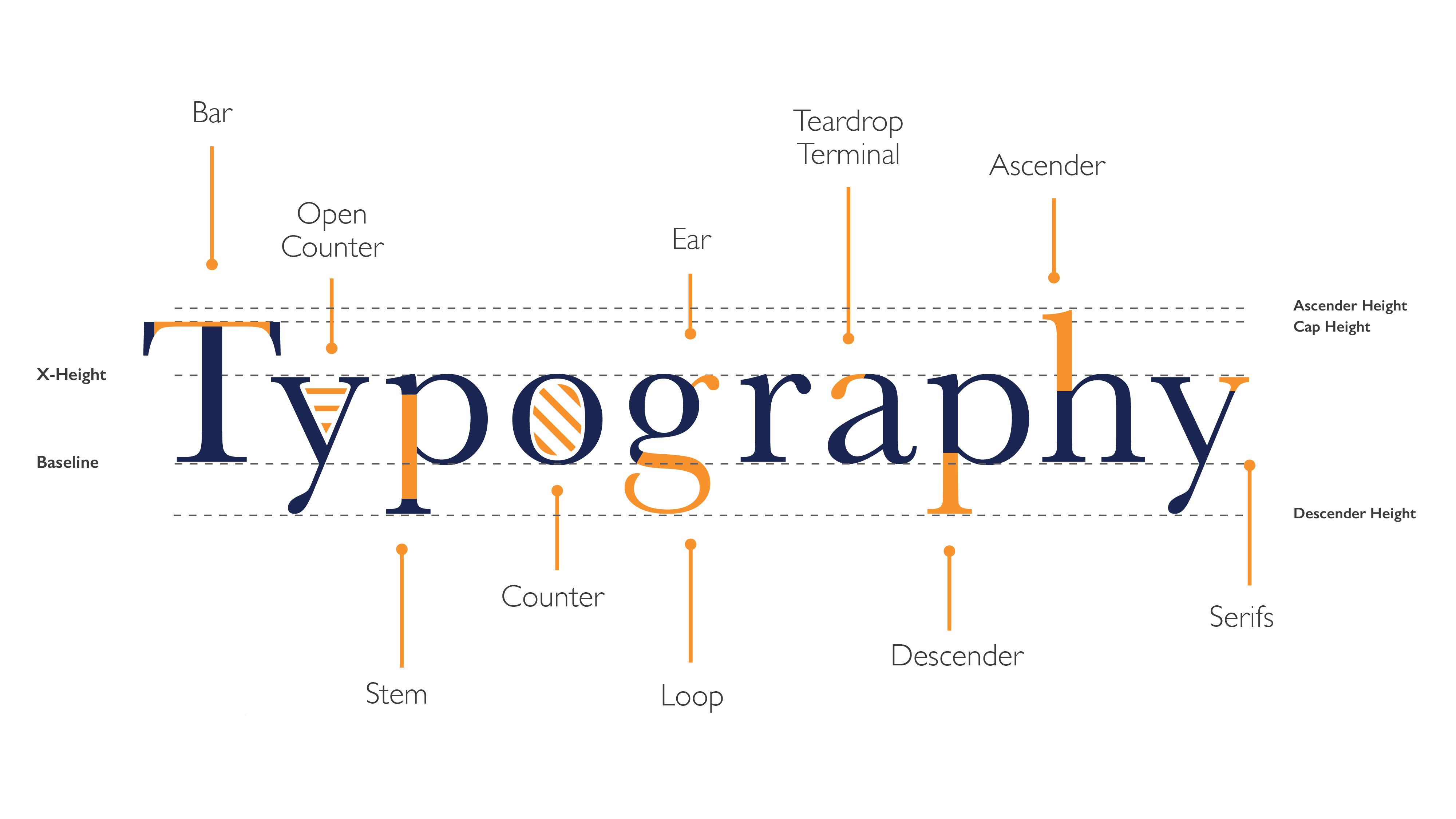
The above is why you have such an easier time reading the text in the pink box than green. More of the word-form symbol is apparent in the trees, and your darting eyes can do their work with just that.
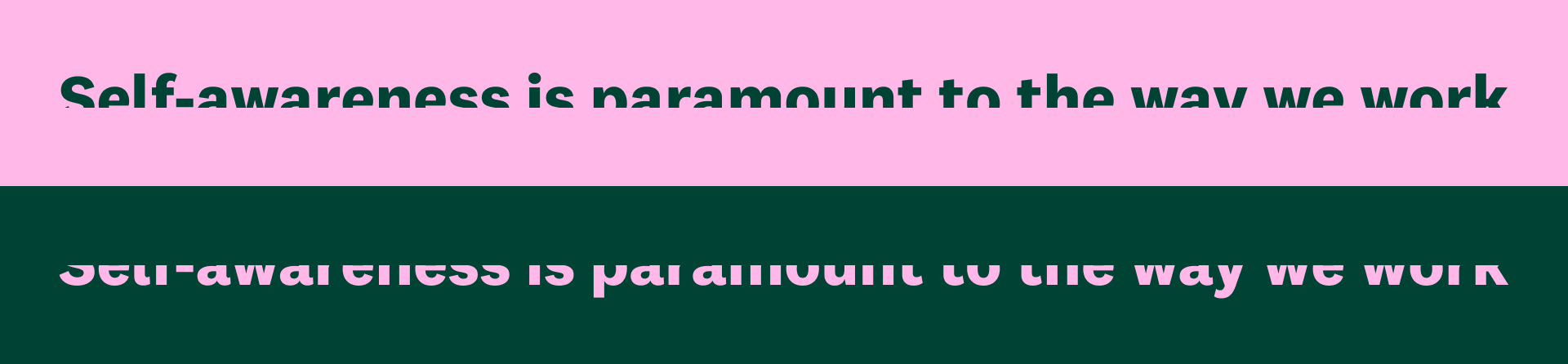
Yet word-predicters like ChatGPT, Claude, Perplexity, and every other LLM simply guess the next most likely word. They are architecturally incapable of looking back.
Furthermore (and no, I am not yet done), the very act of writing shapes your thinking which in turn shapes the writing. It is a dialogue. The value is not the words you emit but ideas that form and reform.
But LLM companies want you to believe word selection is wasteful and profane and best left to the machines. They want this because they want to lull you into sloppy-brained dependence. They want to sell sharper thinking back to you as a utility, just as the beauty industry convinced billions of women they were unattractive so they might sell makeup. LLM makers are rapidly losing money trying to hook everyone so they can jack up the prices to their actual, environmentally outrageous cost.
And we'll be just a bunch of fat hands jamb-ing the slot machine for more slop, too enfeebled to stop.
It doesn’t have to be this way, obviously. You can yet save yourself from the coming carnival of lobotomies. Let this rubric give you a start.
The Fenwick clear writing rubric
This is Fenwick’s rubric for clear writing, developed over the 10 years I’ve spent helping tech companies work back from jargonic diatribes to say what they really mean and work in their buyer's best interest. And while in this article I can’t offer you or yours all there is to know, this rubric and the accompanying questions form the foundation of the course I teach.
It offers questions because they’ll kickstart your psychomotor and get you generating connection and awareness and a love of critical questioning, just like some of the world’s finest editors.
They don’t make your work easier. They make it better. And that is how it has to be if you want your intellect.
Clear writing is six things:
1. Precise
Uses exact, unambiguous words, avoids clichés, and establishes a setting.
Ask: “Could I be more specific?”
2. Concise
Hurries to the point. Minimizes adverbs, nounings, superlatives, redundancies, floridness, and double negatives.
Ask: “Can I say this in fewer words?”
3. Easy to read
Requires no special knowledge or lookups. Prefers active voice, defines jargon, offers context. Uses short sentences, few acronyms, actively worded.
Ask: “Can readers explain it back to me?”
4. Evocative
Engages the senses, varies the structure, and uses storytelling devices.
Ask: “Does this make people feel what I mean?”
5. Helpful
Aids the reader in a present goal. Gives generously without expectation. Aims to be in service.
Ask: “How could my reader apply this right now?”
6. Honest
Avoids fallacies, bias, and hyperbole. Cites its sources. Names its conflicts.
Ask: “How might an unkind critic find fault?”
Hold every piece of your writing up to this rubric, and edit until passable. Commit these questions to memory and life, and you may enjoy more of both.