The first rays of sun etched the outline of the Klamath Mountains in the pre-dawn dark.
The sky was clear, and the emerging dawn began to wash over the starry night. I hid from the wind and the salty ocean spray in the lee of the wheelhouse as the captain motored the 52-foot steel boat to the next string of Dungeness crab pots. Clear skies on Northern California winter mornings mean cold air, and when combined with the maritime dampness of a fishing vessel, there’s a deep chill that’s hard to shake. I sipped the last of my cold coffee, remembering I didn’t make another pot before we started hauling gear four hours earlier.
I felt the boat throttle down and turn away from the coastline some five miles to the east. I glimpsed a few patches of snow on the peaks through the early morning grayscale before my view changed to the dark horizon of the Pacific. I grabbed the buoy stick, tested the hydraulics, stuck my head over the starboard rail, and took a splash of cold water to the face as I looked forward to the oncoming buoy.
I wasn’t sure exactly how I felt at the moment. I was exhausted, cold and sore with a cacophony of competing voices in my head: You’re too old for this shit…pretty good for a middle-aged man with graying hair…what horrible choices have you made to leave you with risking life and limb for crab as your best option for making rent…if the season is good I could pay off a credit card, add to my savings, and buy a new camera…shut up and look at what’s in front of you…
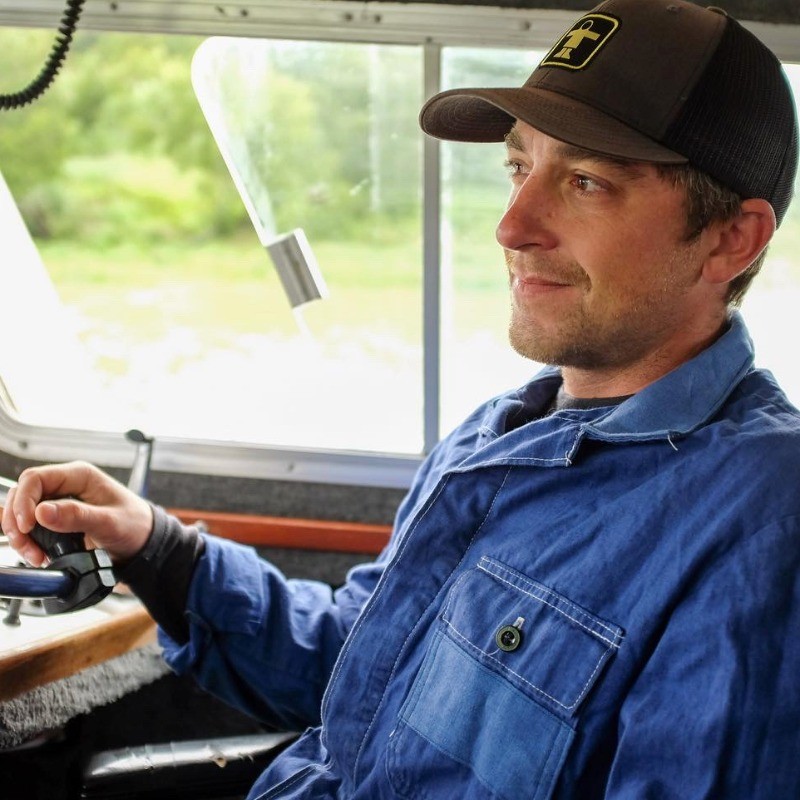
The sun had crested the mountains at my back, and the first light of day reflected off the choppy sea in front of me like shimmering flakes of amber. Then the first buoy in a string of 50 crab pots crossed the bow. I pulled it to my hands with the buoy stick, the current was ripping the water below adding tension to the rope and taking nearly every bit of my strength to pull it through the hydraulic block before the machine could take over the heavy lifting.
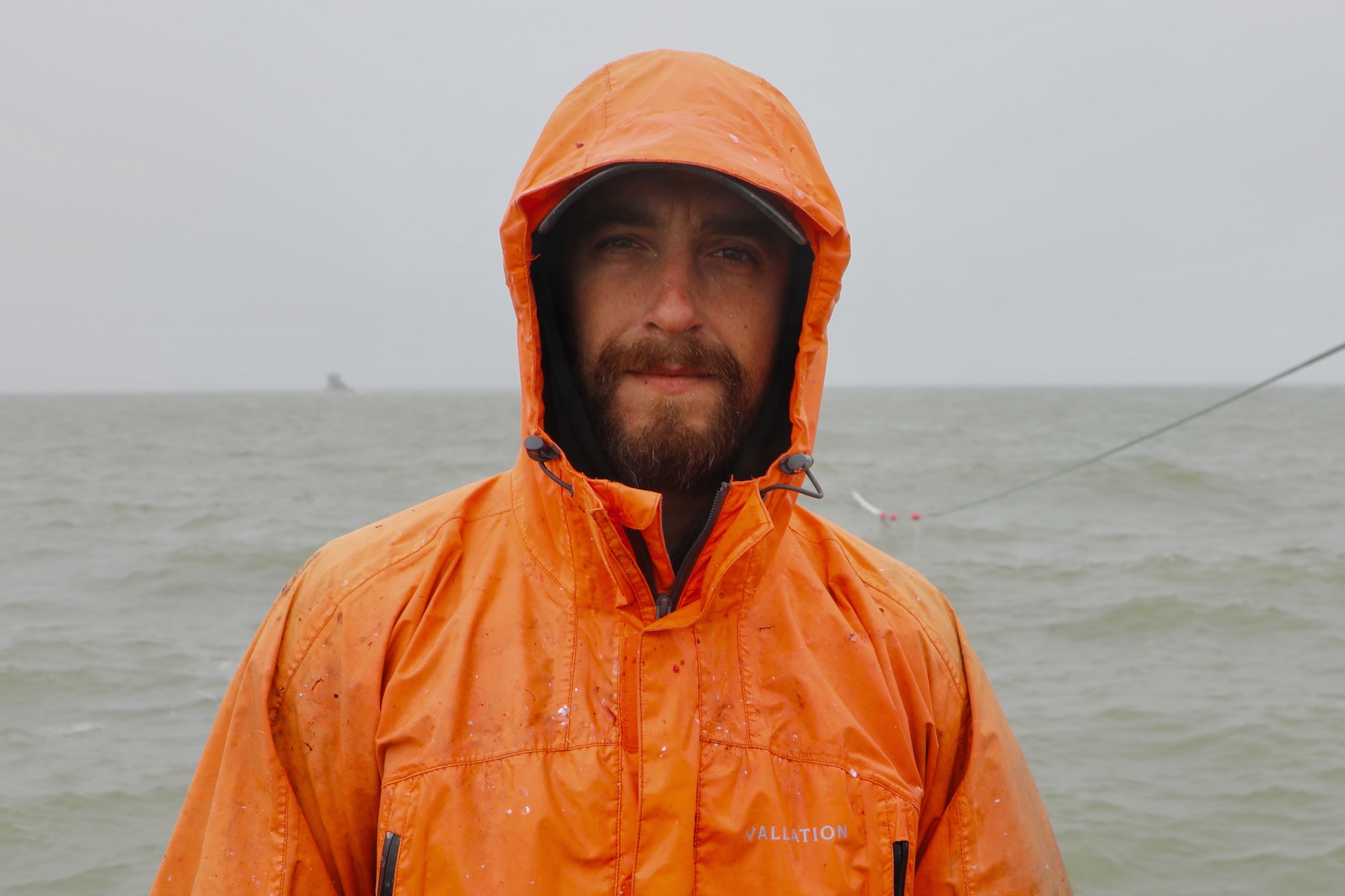
A few months back, I found myself mostly unemployed, so I hopped on a commercial fishing boat in Crescent City, California for a few-week stint at the peak of the Dungeness crab season. Commercial fishing is not new to me. Over the past 15 years, I have worked in more than a dozen fisheries from Southern California to the Bering Sea. I’ve repeatedly told my friends and family that I was done with fishing over the years, that the hard life at sea was no longer worth the potential reward—too much blood spilt, bones broken, and close calls for my own good.
I originally got into commercial fishing because I couldn’t pay my student loans working as an up-and-coming journalist at a small daily newspaper. After a rough start, I worked four years straight in Alaska and Washington State, paid off my debts, and in the process, developed a trade. This experience on the water has been foundational to my career as an award-winning journalist, then onto a graduate degree in environmental policy, a Fulbright fellowship, and finally as a spokesperson and science communicator for the National Oceanic and Atmospheric Administration (NOAA).
The shift from working as a fisherman to working in fishery science and management was not as permanent as I had expected. I found myself swept up in the mass cull of the federal workforce in early 2025 and a labor market awash with talented and credentialed people like myself, all angling for dwindling opportunities for environmental policy jobs. The implementation of the federal reduction of force was rife with fuckery and incompetence—performative cruelty and slapdash execution. So much for the security of a federal job, I had hoped the itinerant life of killing fish and selling stories was behind me.
I walked on the boat in January and introduced myself to the captain. We hadn’t met before but were recommended to each other by a mutual friend. I needed someone who knew how to catch crab and paid fairly, and he needed an experienced deckhand who knew his way around a crab boat and could handle the long hours and heavy lifting.
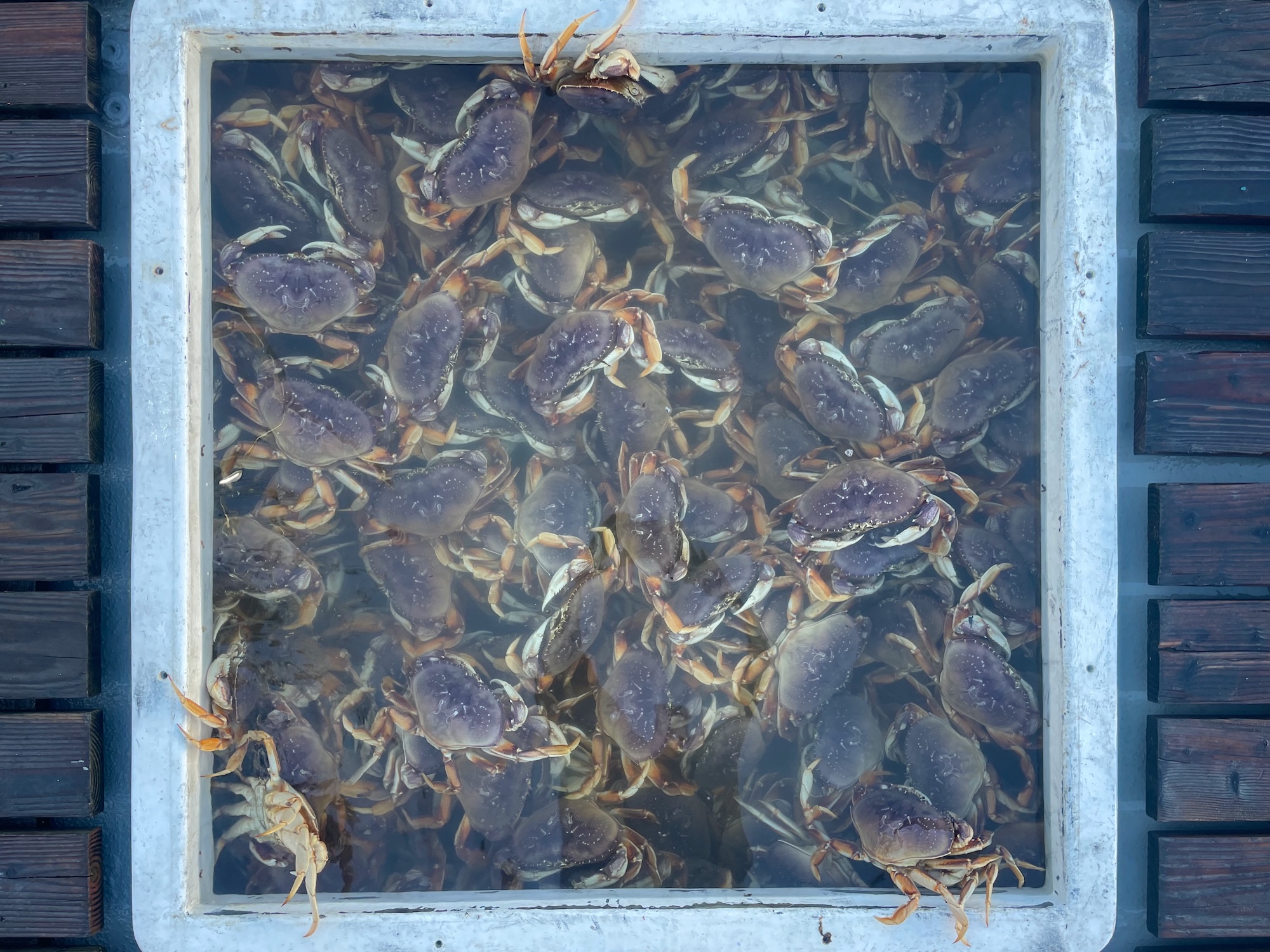
Alongside squid, Dungeness crab is the largest fishery in California, with the two neck and neck for the highest-grossing fishery in the state every year. Dungeness crab is harvested from Monterey Bay to the Oregon border in winter months. The fishery has been embroiled in controversy the past decade for entangling overmany whales. It is an unfortunate situation both for seamen and cetaceans. Shifts in ocean conditions largely due to climate change put the vertical lines of tens of thousands of Dungeness crab traps directly in the path of blues and grays and humpbacks.
New gear has helped somewhat. California Fish and Wildlife now monitors the migration and only opens the season once they have passed. When I arrived at the Crescent City harbor on January 11, boats were loaded with crab pots and the anticipation hung in the air. At 8:01 a.m. the following day, we could begin setting gear and then hauling it at 12:01 a.m. two days later. Once fishing starts, time means nothing other than not wasting it with trivialities like sleep and a sit-down meal.
The hardest aspect of commercial fishing early in my career had been mental. Sleep deprivation and physical strain are hard enough, but when your mind wants out, to be anywhere other than where it is, there’s nothing but moment-to-moment misery until that perspective changes. It can still be challenging, but the longer I’ve worked on fishing boats, the more peace and clarity I’ve come to find through the process.
A commercial fishing season is almost akin to a psychedelic trip: It starts off exhilarating then grows difficult as you face discomfort, question life choices, and finally embrace the suck and persevere. For me, it fulfills a primal instinct of enduring hardship to capture food. Bobbing on a small boat with the horizon extending as far as the curve of the earth provides the needed space for mental clarity, seeing both the forest and the trees, or more appropriately, waves and ocean.
Back on the boat, the cold morning sunrise gave way to day. We didn’t stop. Haul the crab pot, shake the crab out, refill the bait jars with frozen squid and mackerel, set the crab pot back in the water, sort the crab (only males with a shell width of 6.25 inches or greater), grab the next buoy, then start hauling the next pot. Over and over, hundreds of times a day. There’s not much time for anything else, and my diet consisted of protein shakes, sugar-free Red Bull, ibuprofen, and granola bars.
To track the time, I looked more to the sun than to my phone. Between high noon and the sunset, I thought our star was taunting me, moving much slower than I wanted. I tried to pay no mind, and lose myself in my thoughts and work. In the afternoon, we stacked 50 crab pots on deck to move them to a different area where the captain thought the fishing would be better. Moving around those heavy pots—weighing around 125 pounds each—works up a sweat under heavy rain gear and I didn’t have time to strip a layer.
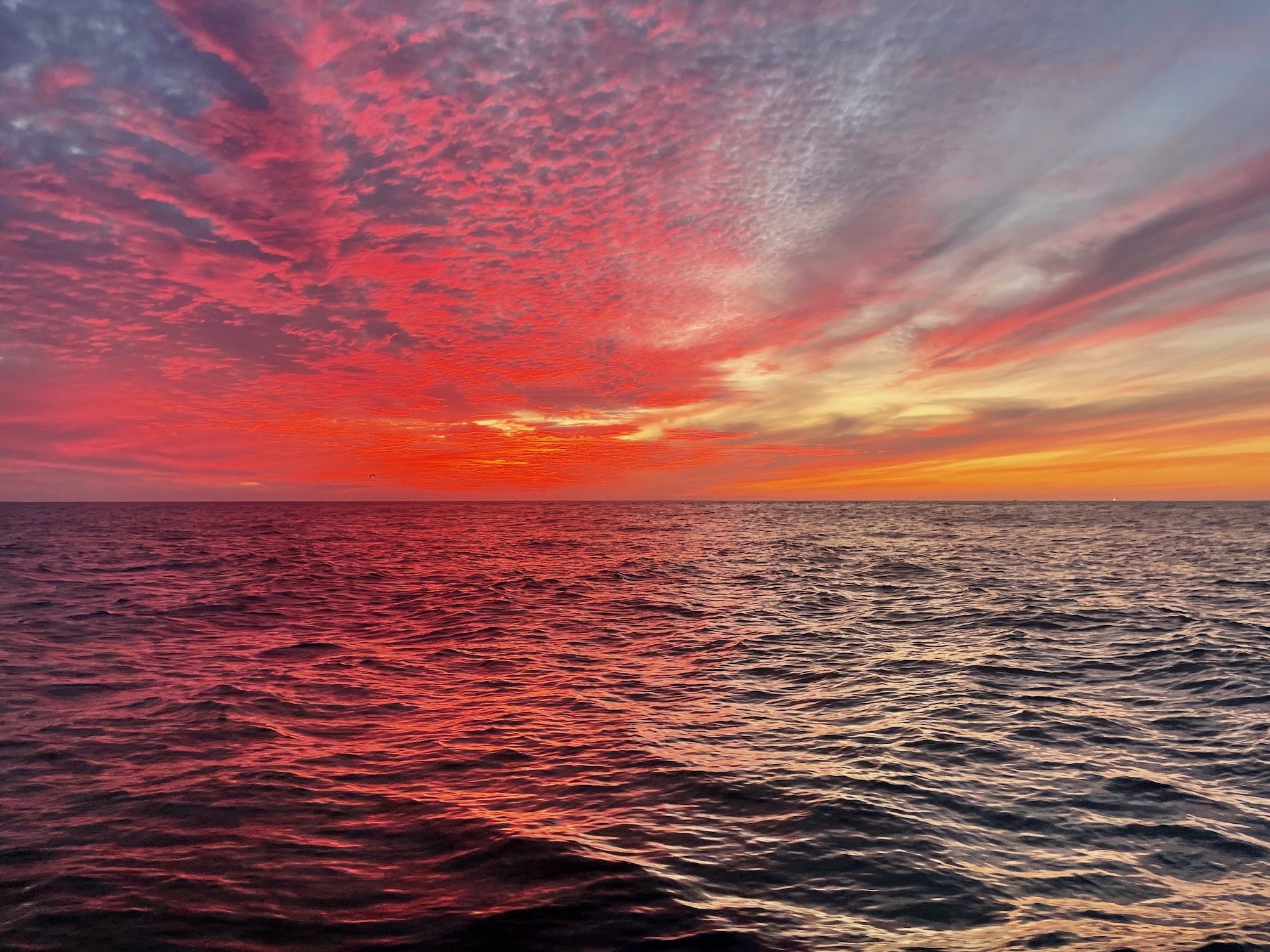
Just as I was about to overheat, weather blew in and the sun was about to drop behind the horizon. Ripples of clouds were ablaze in orange and red which reflected off the slate-green sea. The Klamath Mountains to the east were obscured by cloud and fog. I took a second to enjoy the moment, another day on the water, observing both the rise and the fall of the sun. Then it was cold and my clothes were wet, but there was still no time to change, we were at the next string and I had to grab the buoy.
I could have let the misery creep in, to let the physical discomfort become mental distress, to hate the present and want to be done with it all while still having hours left to go. When I stuck my head overboard to look for the next buoy, I was smacked with heavy ocean spray and felt—to my delight—enjoyment. I let my mind flow out with the ripping tide allowing my body to move through memory and instinct. I can’t tell you where that tide took my thoughts because I can’t remember specifically, but many of the stresses of my terrestrial life seemed trivial. I came back to land with a weakened ambition but strengthened resolve.