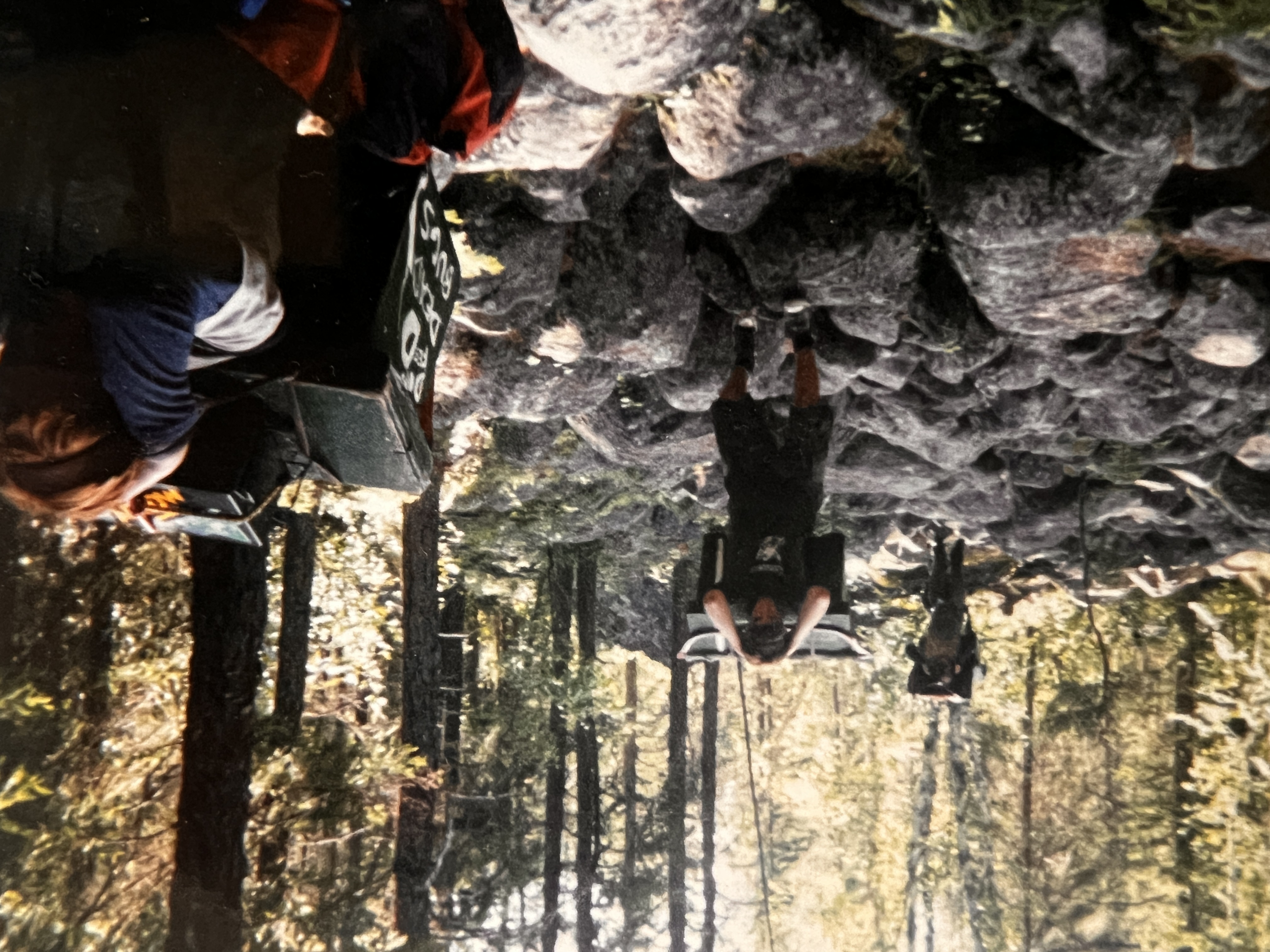
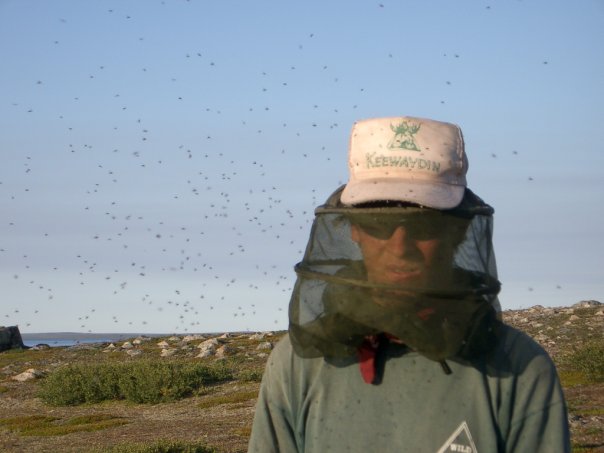
A mosquito grazed my eyelid. But with a canoe suspended over my head, all I could do was blow at it. And sweat, and sweat.
No padding for my bony thirteen-year-old shoulders. No shelter against the rain. No tapping out, for there was physically no way to quit and go home. Finally, I spotted the nose of someone else's canoe in the water far below. I stumbled down and gently lowered the canoe—our only way home.
I saw my friend Jack’s eyes. He’d been crying too. Yeah. “This sucks!” I shouted. Echo and silence. We looked at each other and went right back up for a second load.
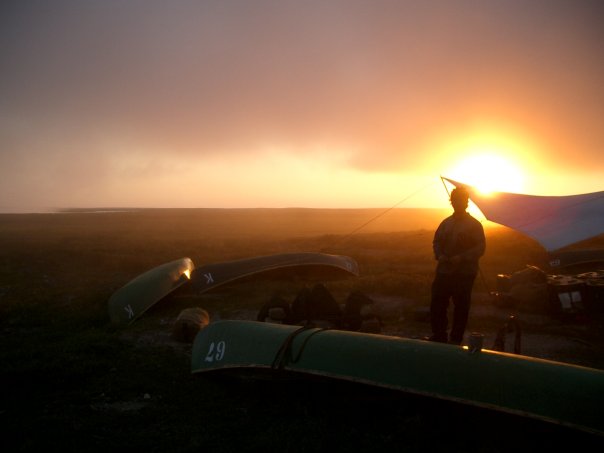
After an hour of paddling, we found a spot to camp and unloaded the boats. My friend Colin set off into the woods to fell a dead tree for firewood while a few of us gathered stones to build a fireplace. I dragged rocks for our fire irons. We cooked and ate and cleaned the pots in the rain. After a tough day, we went straight to the tents and enjoyed the semi-dry respite.
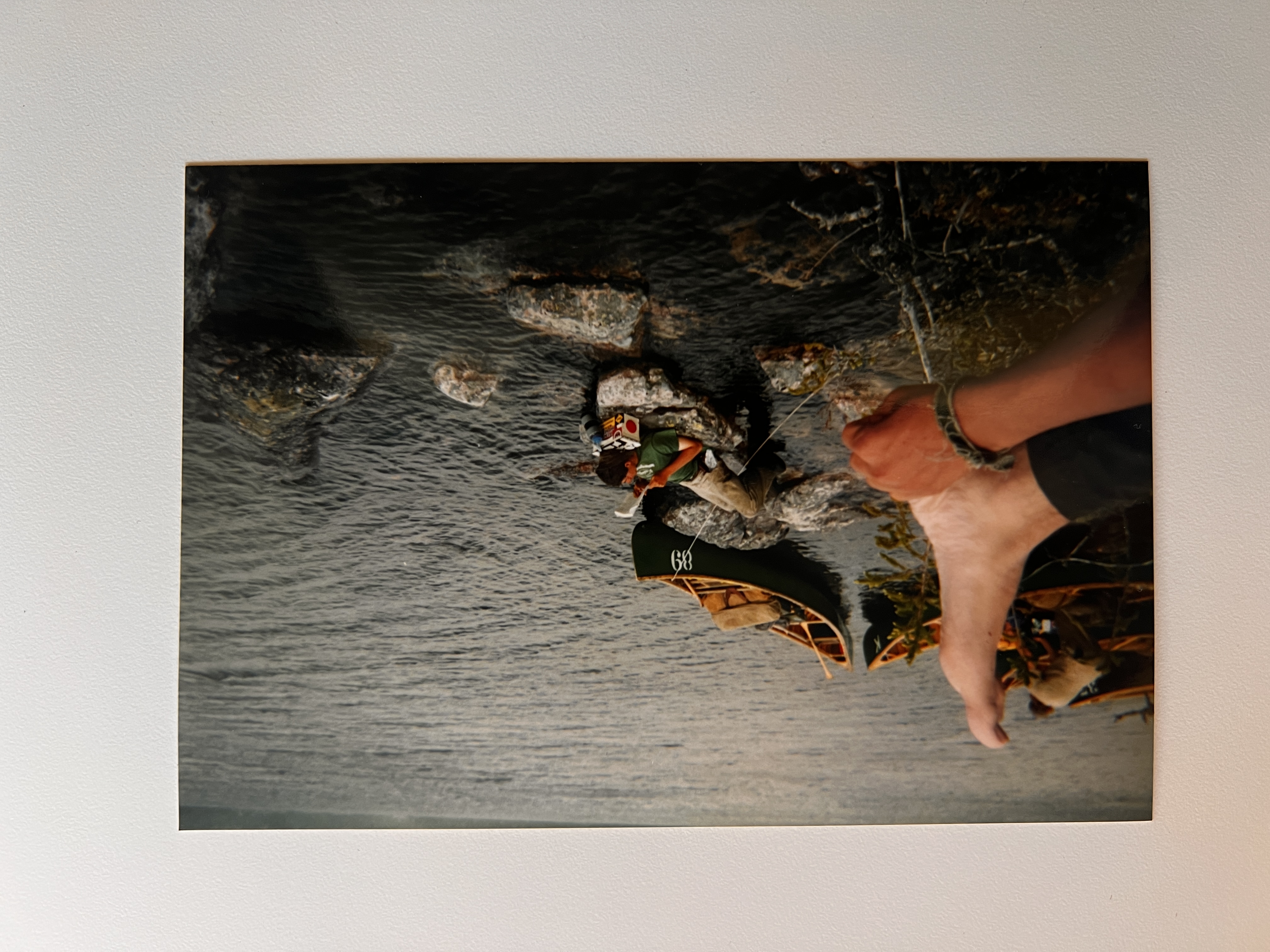
Unless you have a bush plane, pretty much the only way to travel through the far northern reaches of Canada is by canoe. The web of skinny lakes and interconnected rivers serves as the original transportation network through the pine forests that the Cree, Ojibwe, Algonquin, and Innu still call home. These peoples developed birchbark canoes sealed with pine resin—a technology perfectly suited to the landscape. European colonists and furtrappers later added canvas and eventually paint for waterproofing. Not much has changed since the days of the French hunters who would paddle through the same waters in search of beaver, arctic hare, and moose.
Huge swathes of land in the North Country are pure wilderness, with only dirt logging roads or no roads at all. The short, scrappy trees don't grow big enough that far north to yield dimensional lumber, so they're used mostly for toilet paper.
We would get one roll of toilet paper per person for a 40-day trip. I still wipe my ass frugally, knowing every roll is a bite from this beautiful boreal forest.
This Canadian timberland is the largest intact forest ecosystem on earth, meaning it has not been significantly disturbed by industrial development. Predator-prey relationships still keep populations balanced, and invasive species are minimal. Large-scale natural disturbances like wildfire and insect outbreaks still occur at their natural frequencies. This forest spans from Alaska to Labrador and represents about a quarter of the planet's remaining untouched forest. It’s a larger area of pure wilderness than the Amazon. It holds more surface freshwater than anywhere else on Earth.
"This forest spans from Alaska to Labrador and represents about a quarter of the planet's remaining untouched forest. It’s a larger area of pure wilderness than the Amazon."
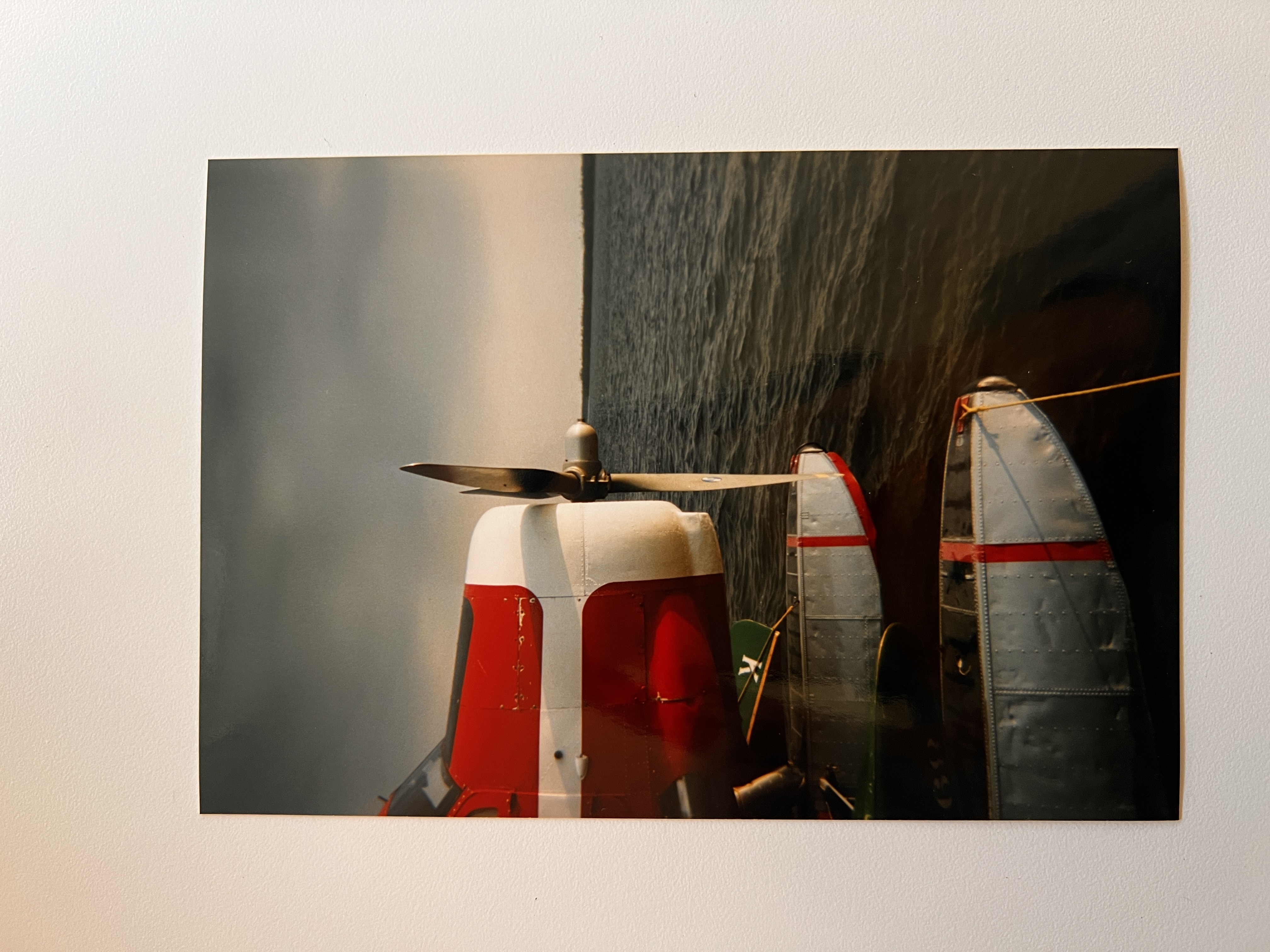
In the tiny towns that do exist, many are native settlements located along train lines, served by a single retailer called The Northern Store—a sort of arctic general store. The Northern Store is actually the last remnant of the old Hudson's Bay Company, colonial counterpart to the Dutch East India Company.
I spent four summers as a teenager canoe tripping through the upper reaches of Canada. Each year we went farther north and stayed out longer—first with 5- or 10-day trips, then 20 days in the wilderness. The last two summers, we stayed 40 days. Being in nature for well over a month is something few modern people will ever experience, and it set the course for my life.
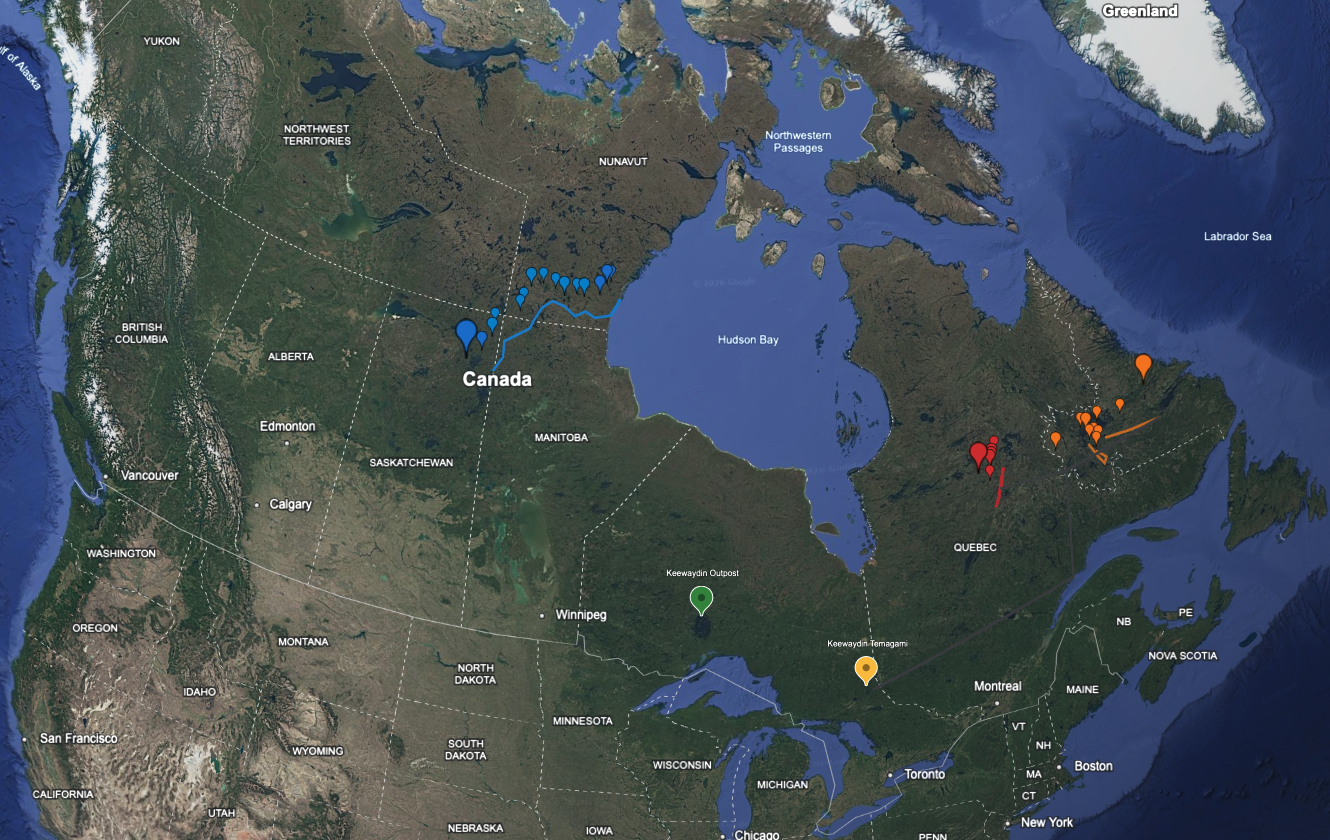
After the first week, civilization starts to melt off of you. You get used to waking up and stepping out of your tent to put on wet socks and cold shoes before coffee can be conjured. Much of your day is spent placing a wooden paddle into water, seeing how little splash you can make when it enters. Long lakes might go by without a word exchanged, absorbed in thoughts of home, remembering conversations you had with people, daydreaming about cheeseburgers and milkshakes.
After the second week, you're just out there. You run out of movie quotes and stories of broken arms and girls. The moss and the trees and the smell of rain become your life. Looking up at the moon, you realize it's the same moon every human has ever gazed at, and you start feeling the broader arc of time that we're all a part of. At some point, it dawned on me—this was home. We came from here. This is the “real world”—we contrived cities inside of this. It's easy to have an intellectual understanding that we're dependent on nature for our survival. But when you're out there for long enough, it seeps into you. Your emotions rise and fall with the weather; sad with the cold and laughing as the sun dries your neck. I came back not as an environmentalist, but a practical person with a permanent awareness that the planet is our body, and that we’d die without it.
"Looking up at the moon, you realize it's the same moon every human has ever gazed at, and you start feeling the broader arc of time that we're all a part of."
My vision changed out there. Sometimes when I looked out over the landscape, it felt like a Norman Rockwell painting, not just trees and clouds. At first, it was just quick flashes. Then the painting-feeling would linger for minutes. Then days. In my journals, I wrote about dropping the “idea” of the object I was looking at. I would stare at a shoe and, rather than seeing the concept of a shoe, I would inspect the unique details. The spots of fuzz, the granules of sand in the caked-on mud, the tendrils of moisture drying out unevenly. Through the hours of paddling and boredom, I gained a habit of contemplation that has continued through my life.
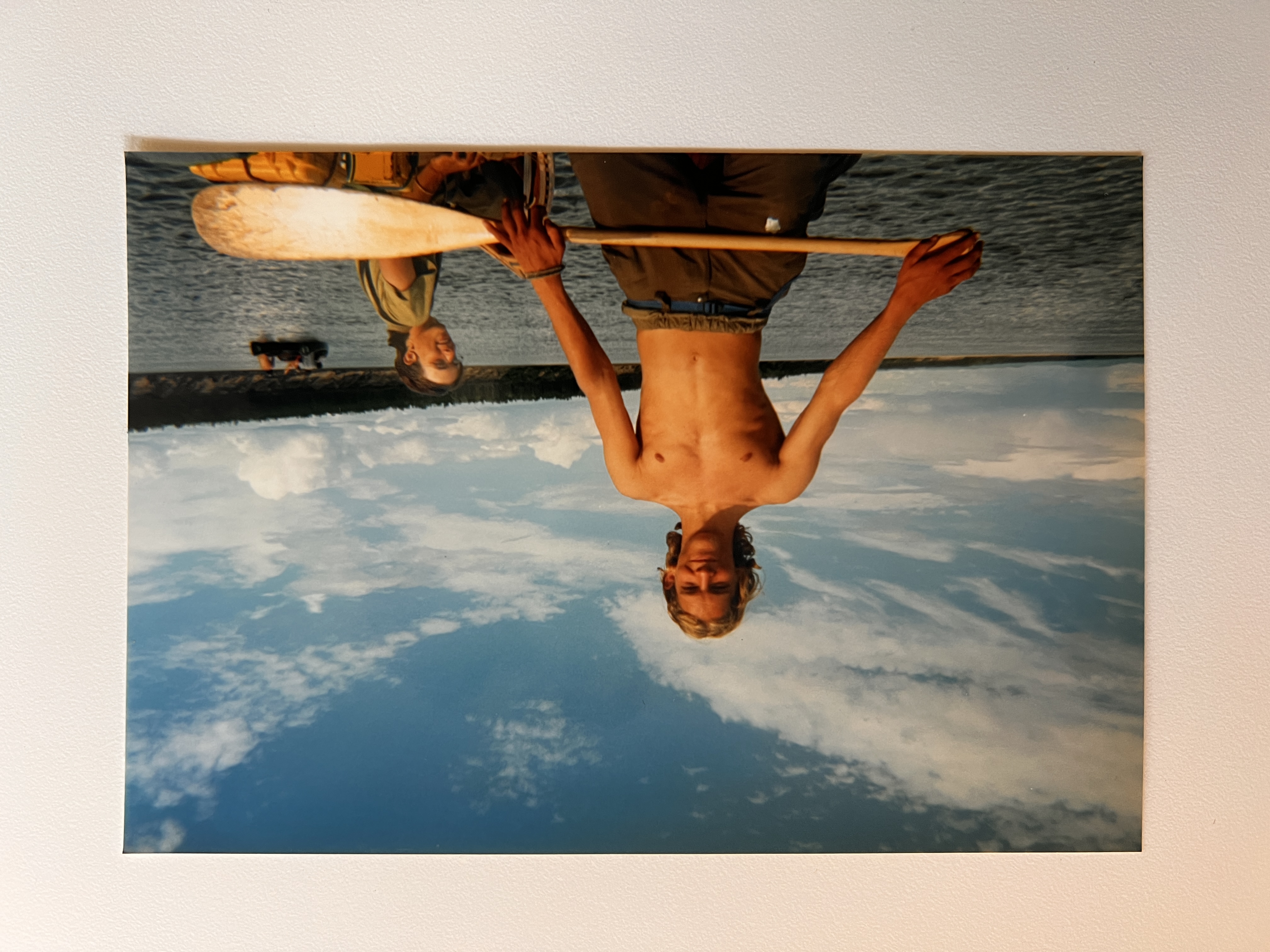
Over those timeless summers, I learned that I can't get anywhere until we all arrive. There's no leaving anyone behind. We're in this together, because our lives actually depend on it. It really matters how we treat each other. In modern life, we have the luxury of declaring someone toxic and abandoning them. Out here, if you’re annoyed with someone who you’ll depend on for 40 days, you’d better figure it out, and you do. You make amends, find a better attitude, and move on.
Coming home after the first year, my mother marveled at how helpful I had become around the house. "You unloaded the dishwasher without me asking." I shrugged. It wasn’t much. Certainly less than chopping a tree or building a fire to heat water. Trivial compared to scrubbing the carbonized residue of stew from a pan while mosquitoes flayed me.
The first night back in a bed would always feel wrong. Too soft. Too warm. The room was too quiet, my thoughts too loud. The comfort felt fake and unearned. I lay there in the dark, the ceiling close and still, and realized I missed the sound of rain on nylon, the smell of woodsmoke in my hair. But more importantly, I missed my sense of mission. I missed doing something hard, something rewarding, something worth telling a story about. I missed doing it as a team.
For many of us, it’s been three generations since people knew how to grow their own food. We simply click a button and food arrives. But who cares? We can build anything now. The question is no longer "Can we?” It’s, “Should we? And why?”
Our society has gotten very good at building canals around obstacles, smoothing the difficulty. But a canal can only ever get you there faster. A portage makes you someone who’s grateful and deserving to have arrived.
"What should we build?" isn't a question for engineers alone. People who've been humbled by carrying the weight should weigh in on the type of society we want to build. Perhaps they’d ask the necessary follow up: “Should we? And why?”
The more I realize about my future, the more I can see it looks like the past. A future where sweat beads down my forehead and I know I've earned my lunch. Where my shoulders burn under the weight of the canoe and I keep walking anyway. Where I keep looking back until everyone rounds the point, because those are the people I'd trust to make the hard calls.
Wherever I can, I choose to portage.