Issue 11 | July 17, 2026 | Sign up
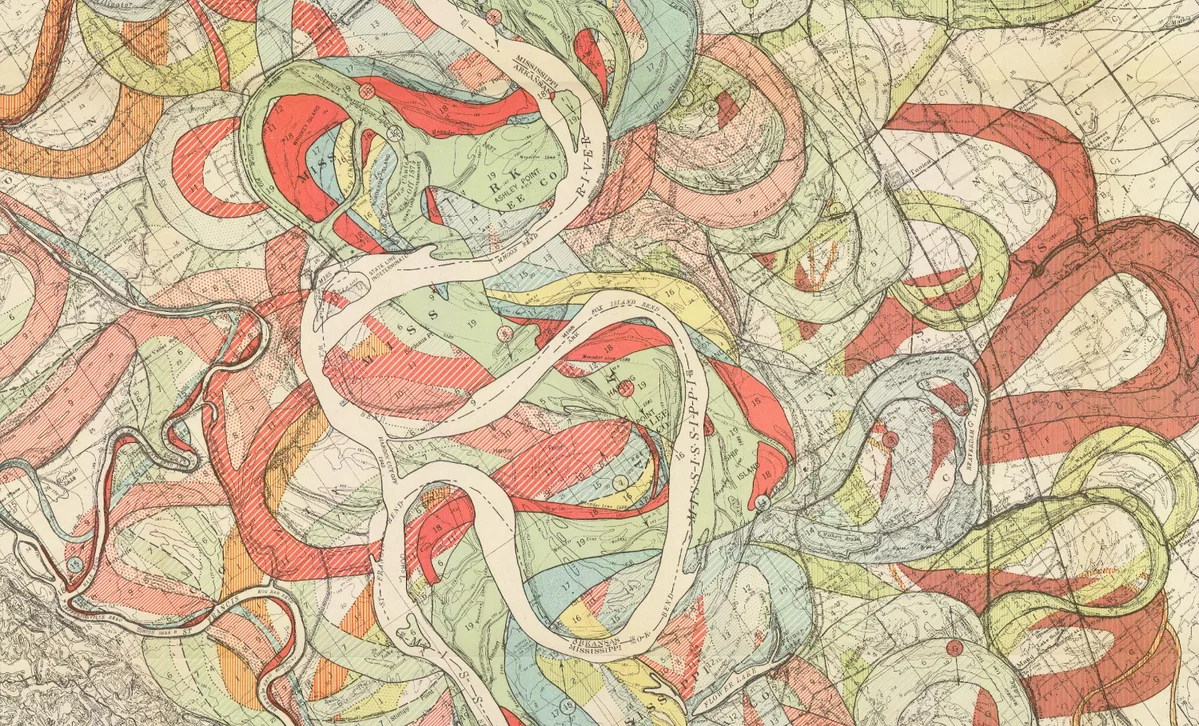
You probably already know that I’m not so great at guessing what others think. In the prior issue, I shared how that’s led me to a strategic approach resembling a vine—a series of tests that haltingly feel their way to light.
But some people really do occupy the opposite side of the spectrum—pictured below. They are super-seers. Eve, our co-founder, is among them. She can hear someone talk and instantly know their truth and how to frame it. This recently happened with a client. She listened to them and wrote their company messaging. We tested it with buyers, and it fit like a key. I expressed amazement. Eve just shrugged.
These two dispositions produce two very different processes. Today, I share what it’s like on Eve’s side and why seeing must come first.

You'll find no meaning in the machine
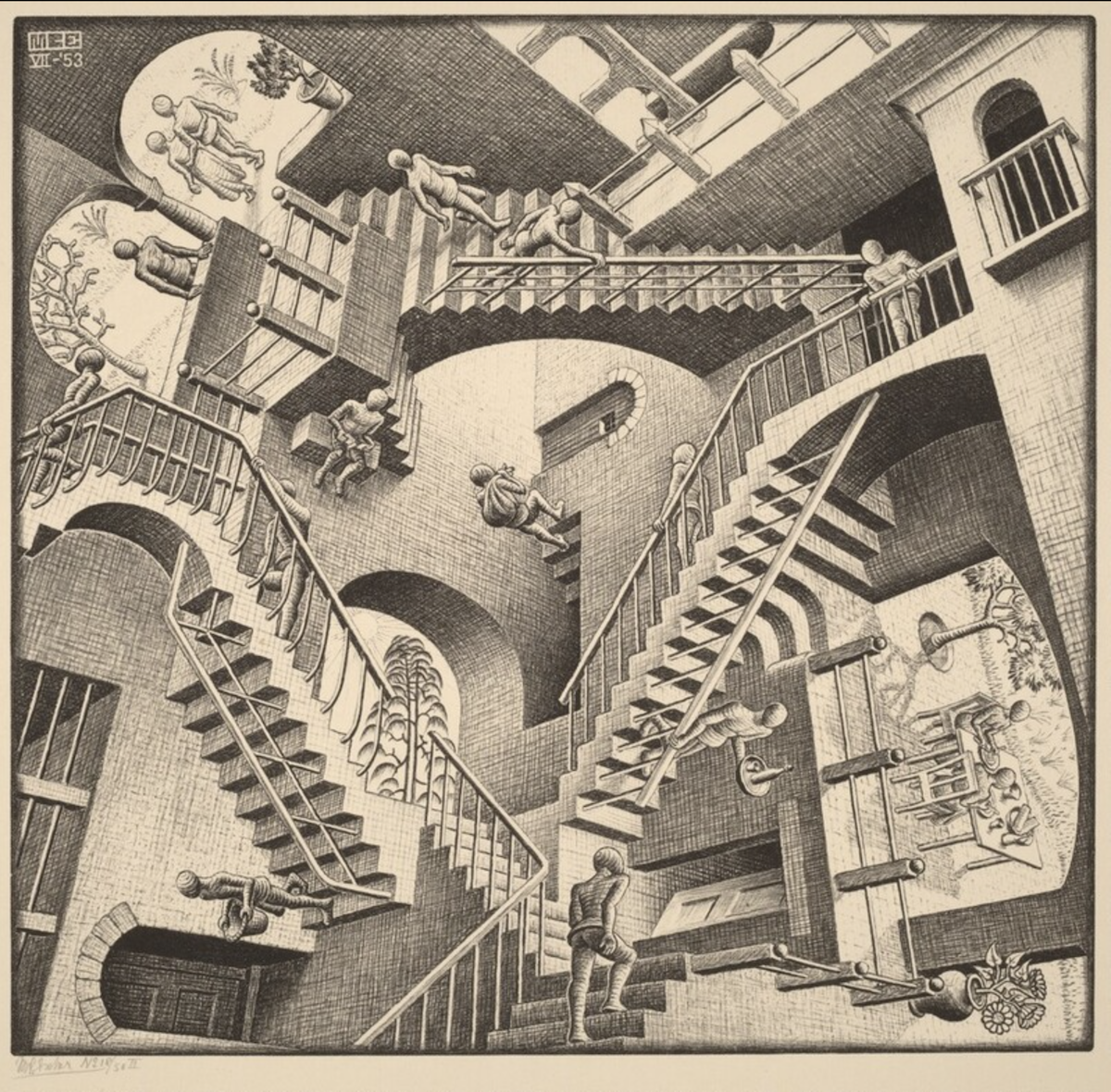
B2B overflows with systems thinkers who love mechanics, spreadsheets, and automata. They thrive in the knowable and categorizable. Though they may be less aware of the flipside: that messy liminal frontier where you say things that move people. That is why they hire creatives to write “content,” albeit as a forlorn final step.
I’m more than a decade into this work, and time and time again, I watch these teams skimp on saying something meaningful, then throw the bulk of their budget at ads and PR, backlinks and syndication, and it produces numbers but not quite real interest.
I call this message-less marketing and it is very expensive. It’s a billboard with no logo. An email without text. An empty voicemail.
They’re using the vine approach, but mistakenly thinking it will lead them to find out who they are to their buyer. And let me tell you, it cannot.

Vines need a trellis
I think technical marketers gravitate to the vine approach because it produces data, which CFOs love. It feels empirical. It holds its own in a debate. But it ignores these facts:
- Half of ad clicks are bots.
- Your addressable audience is not your actual audience.
- Ad tests are full of biased decisions.
- Few B2B lists are big enough to be statistically significant.
- The buyer doesn’t even know what they want.
A company that tries to ‘find’ its message through programmatic ads will only ever grow more lost. The words will grow unrecognizable and detach from the real product as the team obsesses over whatever encourages clicks—like outrage, confusion, and minor lies.
Follow this path and you’re left with no deeper knowing. You’re the exact same as all the others. And when those ad platforms change the game, as they often do, you must start completely over.
“These two skills, the vine and the obelisk, develop for different purposes,” says Eve. “Because to attract others, you must come from an authentic place: the truth. You must know who you are and what you stand for; it’s the only way for those who are ‘for you,’ to find you. A vine can only explore once that’s placed. The obelisk holds firm the soil from which the vine grows.”
And how exactly does one do that?
On placing the obelisk
The obelisk is a metaphor for the unseen made visible. It is the mark of the gardener. Its power is its immutability: because it is unmoving, it can serve as a landmark—an inscrutable artifact towering amidst the foliage, pocked with runes.

“The obelisk’s power is the power to say ‘no,’ not in an exclusionary way, but in an inviting way—to dare to have defined edges so that others may know you and connect with you more deeply,” says Eve. “It creates more space for being who you are. It generates capacity to be in more right relationship with self. Which in the end, is far kinder than trying to be everything to everybody and entangling yourself in all these relationships that will never work.”
I have a practical example of this. The credit card company Brex used to only accept startups that could prove they’d received venture funding. But as their growth goals grew more unhinged, they asked, “What if we lowered the bar for entry?” They signed on thousands of small business customers who switched off their old banks before Brex realized they weren’t profitable and cancelled them en masse. Brex was operating on pure vine. That has a cost.
Eve helps companies know themselves enough to have a compass. She defines a brand message that situates them in hard firmament. For a legal tech client of ours, she saw that all competitors were saying “We’re for every type of law firm!” Which is, of course, ludicrous. She enshrined “We are for midsized” in this startup’s messaging making it the only honest vendor.
The obelisk doesn’t bend; it is truth. It stands in defiance of all. Even when, in the course of daily use, you must change it somewhat.
“Sometimes the words on the obelisk shift and take new shape, because when they live in the world and between people, they take on new meaning,” says Eve. “Much like we learn from our experiences and from actually doing something over and over, and when we do, we begin to integrate our knowledge into wisdom, and that's when it lands.”
Which, to me, is the hardest thing to grasp.
Can’t we just copy-paste this messaging, marketers will ask? Kind of yes. It depends on the situation. You need a seer to translate it into actual headlines and assets.
In that dialogue with the seer, you can use your trust vine approach—running tests that are rooted in truth, but experimenting with many ways to manifest the message.
“When you’ve built that energetic realization and resilience to align with what you desire most, you can enact all the rest,” says Eve. Because finally, you know who you are. You've taken a position. And now you can be creative in all the ways you tell it.
And that’s the obelisk and the vine. Discernment is using them in order.
Addendum: The obelisk-type person isn’t actually all-knowing, by the way. They’ve been taking in the entire world their whole life and practicing in silent simulation. They’re testing too. It’s just their process is more mysterious and hidden. If that’s you, honor that.
This week, by Eve: To activate this,
Practice active listening. While in conversation, rather than thinking of what you will say next, be completely present with what the other person is saying.
Notice patterns and connections. Pick a period of time in which you intentionally have your eyes and ears out for similarities and things that relate, then ask what are these consistencies telling me?
Build trust with your own observations. This takes practice built slowly over time, this nurtures trust with your own mind and beyond. Share your observations, speak them to another, and witness the response.

There's a principle for this: Masterful Insights
We love the journey to excellence and do not stop when we get it right—we continue to practice until we cannot get it wrong.

Inside Fenwick
Check out Fenwick’s inspiration portal. To keep up, create an account.

Worth reading
The lost treasure of psychological segmentation. My own, from years ago, but just as relevant today.
Laid off. This timely newsletter is an example of timely taste. It’s someone reading the moment and having the tools to execute it quickly enough.
Was reading just a phase? By Rose Horowitch in The Atlantic.
The unquantified self. Another great LinkedIn carousel by Joel Stein.
What makes a good flag? Simplicity, symbolism, restraint, distinctness, and the absence of seals or lettering. (Beauty was never the point.)
See the world with CT vision. Excellent example of a “use case” portal for your customers. Use the product to demonstrate the product.
The business model is the grid. Splendid design talk.
Folio books. Your work needn’t be new if it’s beautiful.
Never forget what a crap job feels like.
On writing
A library of writing techniques.
RIP content marketers. It was good while it lasted but did we really achieve much?
Visually
Michael Christopher’s photos are stunning.
I am not a slop cannon. A funny B2B ad that exhibits breathtaking restraint. They could have done so much and chose to do so little.
Interesting websites: Town, Cohere, Marvin
Long reads
How to study the history of advertising.
The tyranny of structurelessness. An incisive, timeless critique of “structureless” groups and why there’s no such thing. A vacuum always attracts power-seekers.
The strange flight of 2069. Stellar. Paywall.
Palantir wants to be a lifestyle brand. Yuck. And we masses have become so easily manipulable.
On AI
AI search is easy to spoof. By Ahrefs.
Good books: Empire of AI (prescient and depressing) and The Alignment Problem (troubling but uplifting).
Random
The periodic table of questions. It’s neat. But what’s it for? If you find out, tell me. Find by Brian Kerr.